The name inland marine insurance is confusing. Despite the word "marine," this type of insurance usually has very little to do with boats or the ocean. Instead, inland marine insurance is primarily designed to protect certain business property that moves from place to place, travels over land, is stored temporarily away from your main location, or requires specialized coverage that a standard commercial property policy may not fully provide.
That makes inland marine coverage particularly important for Florida contractors, service businesses, equipment companies, installers, transportation-related businesses, and organizations that routinely move valuable property between locations.
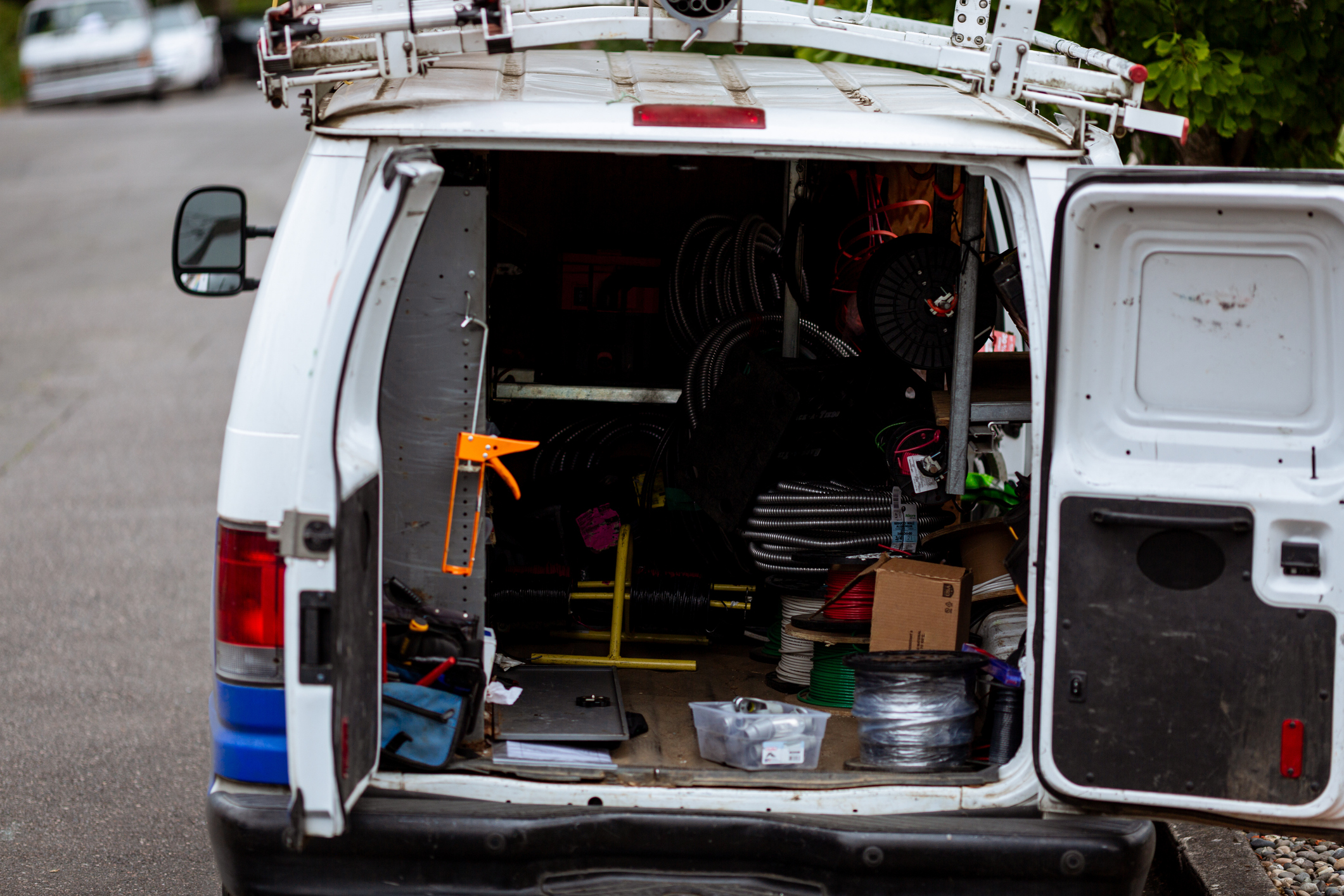
For example, imagine you're an HVAC contractor in Miami. Your technicians leave the shop every morning carrying thousands of dollars worth of power tools, diagnostic equipment, refrigerant recovery machines, vacuum pumps, ladders, and replacement parts. Your commercial property insurance may protect equipment at your insured business location. Your commercial auto policy protects the truck itself.
But what protects the tools and equipment inside the truck or at a customer's job site? That's where inland marine insurance may come in.
What Is Inland Marine Insurance?
Inland marine insurance is a broad category of property insurance designed primarily for movable property, goods in transit, specialized equipment, and certain property located away from a business's primary premises.
The Insurance Information Institute describes inland marine as coverage that can protect products, materials, and equipment while they're transported over land or temporarily stored by a third party. That can include property traveling by truck, van, train, trailer, or other land transportation.
But transportation isn't the only situation where inland marine applies. It may also cover qualifying property:
- At job sites
- Temporarily stored away from your business
- Being installed
- In another company's custody
- Used at multiple locations
Think of inland marine insurance as property insurance for assets that don't stay in one place.
Why Is It Called "Inland Marine" Insurance?
The name comes from the history of marine insurance. Traditional ocean marine insurance developed to protect ships and cargo moving across oceans and waterways. As transportation networks expanded inland, insurers began covering goods after they left ships and continued traveling over land. That eventually became known as inland marine insurance.
Today, the category has expanded significantly. Modern inland marine insurance may cover everything from construction machinery and contractor tools to fine art, communication equipment, and materials awaiting installation.
So despite the unusual name, a plumber carrying tools around Miami may have more need for inland marine insurance than someone who owns a recreational boat — a risk we cover in our guide to boat insurance in Florida.
What Does Inland Marine Insurance Cover?
Coverage varies substantially depending on the type of inland marine policy. Common categories of property may include:
- Tools
- Construction equipment
- Mobile machinery
- Computers
- Specialized electronics
- Equipment in transit
- Materials being transported
- Property temporarily stored off-site
- Equipment at job sites
- Certain property belonging to customers
- Fine art
- Installation materials
Travelers describes inland marine insurance as coverage for business property transported over land, including equipment, products, parts, and materials.
The key concept is mobility. If valuable business property regularly leaves your main location, inland marine coverage deserves consideration.
Inland Marine Insurance vs. Commercial Property Insurance
One of the most common questions business owners ask is: why do I need inland marine insurance if I already have commercial property insurance? The answer comes down largely to where the property is located when the loss occurs.
Commercial Property Insurance
Commercial property insurance generally focuses on property at insured business locations. That can include buildings, furniture, computers, inventory, machinery, and equipment, subject to policy terms.
Inland Marine Insurance
Inland marine insurance is designed to address property that travels or is regularly used away from the main insured location. For example, a construction company owns $40,000 worth of tools. When the tools are stored inside its insured warehouse, commercial property insurance may provide applicable protection. But when those same tools are loaded into a work truck, transported across town, or left overnight at a construction site, the coverage picture may change.
An inland marine policy may provide broader protection for property in those situations. This doesn't mean commercial property insurance never covers property away from the premises — some policies provide limited off-premises protection.
The important question is whether those limits and terms are sufficient for how your business actually operates. Our Florida business insurance checklist walks through how these coverages fit together.
Inland Marine Insurance vs. Commercial Auto Insurance
Here's another common misunderstanding. Suppose a contractor's van is stolen overnight. Inside the van are $20,000 worth of tools. The contractor carries comprehensive coverage on the commercial vehicle. Does that mean the tools are covered?
Not necessarily. Commercial auto physical damage coverage generally focuses on damage to the insured vehicle itself. The contents inside the vehicle may require separate protection.
That is one reason businesses carrying valuable equipment should consider inland marine coverage. Your commercial auto insurance in Florida may insure the truck, while an inland marine policy may insure qualifying tools and equipment inside it.
The two coverages work together rather than replacing each other.
Who Needs Inland Marine Insurance?
Many different businesses may benefit from inland marine insurance. It's particularly worth considering if your business:
- Regularly transports valuable tools
- Moves equipment between job sites
- Ships valuable products
- Stores property at temporary locations
- Installs materials at customer locations
- Has customers' property in its possession
- Owns specialized mobile equipment
- Frequently rents or borrows equipment
Let's look at some specific Florida businesses where inland marine coverage may make sense.
Contractors
Contractors are among the most obvious candidates for inland marine insurance. Examples include:
- General contractors
- Electricians
- Plumbers
- HVAC contractors
- Roofers
- Painters
- Flooring installers
- Remodelers
- Landscapers
- Pool contractors
- Concrete contractors
These businesses frequently transport expensive equipment between locations. Travelers notes that contractors equipment insurance, a type of inland marine coverage, is designed to cover tools and equipment used to complete construction projects.
Contractors should also review their Florida general liability insurance, which addresses a completely different exposure: bodily injury and property damage claims from others.
Mobile Mechanics and Automotive Businesses
A mobile mechanic may carry thousands of dollars worth of equipment in a service truck. That might include scan tools, oscilloscopes, battery testers, jacks, power tools, specialty tools, diagnostic computers, and toolboxes.
Commercial auto insurance may protect the service vehicle. But the expensive equipment inside it may require inland marine coverage.
Traditional repair shops may also need specialized coverage when customers' property is in their possession.
HVAC Companies
HVAC businesses are another good example. A technician might carry vacuum pumps, refrigerant recovery machines, electronic leak detectors, gauges, power tools, and replacement components.
Those items frequently move between the shop, service vehicle, and customer locations. That mobility creates exactly the type of risk inland marine insurance is designed to address.
Landscapers
Landscaping businesses may transport commercial mowers, trimmers, blowers, chainsaws, generators, pressure washers, and other equipment on trailers between jobs.
A stolen trailer containing several pieces of commercial landscaping equipment can represent a major financial loss. Inland marine coverage may help insure qualifying equipment against covered losses.
Photographers and Videographers
Not every inland marine risk involves construction. Professional photographers and videographers may routinely carry cameras, lenses, lighting equipment, drones, audio equipment, and computers to events and customer locations.
That equipment can easily be worth tens of thousands of dollars. Specialized inland marine coverage can be appropriate for mobile professional equipment.
Medical and Technology Businesses
Certain medical and technology businesses also move specialized equipment. Examples might include diagnostic devices, medical equipment, computers, communications equipment, and specialized electronics.
Travelers identifies medical equipment, computers, communications infrastructure, and other specialized property among the types of risks inland marine insurance may cover.
What Is Contractors Equipment Insurance?
Contractors equipment insurance is one of the most common forms of inland marine coverage. It can protect qualifying hand tools, power tools, generators, compressors, excavators, loaders, skid steers, and other construction machinery while equipment is at a job site, in transit, or temporarily stored.
Coverage may also be available for certain rented, leased, borrowed, or newly acquired equipment, depending on the policy. This can be particularly important for contractors who regularly rent expensive machinery for specific jobs.
Does Inland Marine Insurance Cover Theft?
Many inland marine policies can cover theft of insured property, subject to their terms, exclusions, and limits. Theft is a major risk because tools and equipment are frequently stored in trucks, in trailers, at construction sites, and in temporary storage facilities.
The Insurance Information Institute identifies cargo theft as one of the frequent causes of inland marine losses.
For Florida contractors, protecting equipment against theft can be one of the strongest reasons to purchase inland marine coverage.
Does It Cover Tools Left in a Truck Overnight?
Potentially — but this is exactly the kind of detail you should verify. Coverage depends on policy wording, theft exclusions, security requirements, location, vehicle conditions, and limits.
Some policies may contain restrictions involving unattended vehicles or theft from unlocked vehicles. Don't simply ask "Are my tools covered?" Ask "Are my tools covered if they're stolen from my work truck overnight?" Specific questions lead to much better insurance decisions.
Getting a clear answer in writing before a loss is far easier than arguing about it afterward.
What Is an Installation Floater?
An installation floater is another form of inland marine insurance commonly used by contractors and installers. It can protect materials and equipment that are being transported, awaiting installation, stored temporarily, or in the process of being installed.
For example, an HVAC contractor purchases $30,000 worth of equipment for a commercial project. Before installation is completed, the equipment may be exposed to theft, fire, accidental damage, or transportation losses. An installation floater may provide protection during that period.
Travelers describes installation floater insurance as coverage for materials being installed at job sites, including materials while in transit and at temporary storage locations. Businesses that may use installation floaters include:
- Electricians
- HVAC contractors
- Plumbers
- Elevator contractors
- Specialty installers
The Hartford also identifies installation insurance as a form of inland marine coverage commonly used by these types of trades.
What Is Builder's Risk Insurance?
Builder's risk is another insurance category commonly associated with inland marine. It protects qualifying buildings, structures, and materials while under construction, being renovated, or being repaired, depending on the policy.
Covered causes of loss may include certain events such as fire, theft, vandalism, wind, lightning, and other covered physical damage.
Travelers notes that builder's risk can protect materials and covered structures during construction projects, while The Hartford classifies builder's risk as a form of inland marine insurance. Builder's risk coverage is specialized and should be tailored to the specific construction project.
What Is Bailee's Customer Coverage?
Sometimes a business doesn't own the property it's responsible for. For example, a repair shop has a customer's equipment, a dry cleaner has customers' clothing, a warehouse stores clients' goods, or a business repairs high-value electronics.
When another person's property is temporarily in your business's custody, traditional commercial property insurance may not provide sufficient protection. Bailee's customer coverage is a type of inland marine protection designed for certain customer property held in your care, custody, or control.
The Insurance Information Institute specifically identifies bailee coverage as one of the specialized forms of inland marine insurance.
Inland Marine Insurance for Property in Transit
Property moving between locations is one of the original purposes of inland marine insurance. Imagine your company transports $50,000 worth of equipment from Miami to Orlando. During the trip, the truck is involved in an accident and the equipment is destroyed — or the vehicle is stolen during an overnight stop.
Depending on the policy, inland marine insurance may provide coverage for qualifying property while it's being transported. This can be valuable for businesses regularly moving expensive inventory, equipment, supplies, and materials between facilities, customers, and job sites.
How much you'd pay out of pocket in that scenario depends on your deductible — see our guide to how insurance deductibles work.
Inland Marine Insurance vs. Motor Truck Cargo Insurance
These coverages can sound similar but may serve different purposes. Inland marine insurance can protect a business's own movable property and many other specialized risks. Motor truck cargo insurance generally focuses on a transportation company's liability for cargo belonging to others that it has agreed to transport.
For example, a contractor transporting its own $20,000 generator may need contractors equipment or inland marine protection. A trucking company being paid to transport someone else's $200,000 shipment may need motor truck cargo insurance.
The Hartford describes motor truck cargo coverage as protection for transportation businesses' legal liability for freight that is damaged, lost, or stolen while under contract.
What Inland Marine Insurance Typically Doesn't Cover
Inland marine insurance doesn't cover every type of business loss. Common exclusions or limitations may involve:
- Normal wear and tear
- Gradual deterioration
- Intentional damage
- Mechanical breakdown
- Insects or vermin
- Certain unexplained losses
- Property not properly scheduled or reported
- Certain flood or earthquake losses
- Employee dishonesty
Coverage varies significantly by insurer and policy form. That's why reviewing exclusions is just as important as reviewing the coverage list.
Does Inland Marine Cover Equipment Breakdown?
Not automatically. Suppose a commercial generator simply fails internally because a bearing wears out. That's very different from the generator being damaged in a covered collision.
Mechanical breakdown, ordinary wear, and maintenance issues may be excluded from standard inland marine coverage. Businesses relying on expensive machinery may need separate equipment breakdown insurance or specialized endorsements.
Does Inland Marine Insurance Cover Hurricanes?
Potentially, depending on the policy. Florida businesses should pay particular attention to how inland marine coverage handles wind, hurricanes, named storms, flooding, and equipment stored outdoors.
For example, equipment at a South Florida construction site could be exposed to major wind and water damage during a hurricane. Coverage depends on the policy's terms, exclusions, deductibles, and geographic restrictions.
Don't assume that because equipment is insured against theft it is automatically insured against every storm-related loss.
Inland Marine Insurance and Florida Businesses
Florida businesses face several risks that can make inland marine insurance particularly valuable.
Hurricanes and Tropical Storms
Equipment is frequently stored at temporary job sites where it may be more exposed to severe weather.
Heavy Rain
Florida thunderstorms can damage tools, electronics, and equipment that aren't properly protected.
Theft
Contractor trailers, work trucks, and unattended job sites can attract thieves.
Frequent Travel
Businesses in Miami, Fort Lauderdale, West Palm Beach, Tampa, Orlando, and other Florida markets may travel substantial distances between jobs. The more frequently valuable equipment moves, the greater the exposure.
How Much Inland Marine Insurance Do You Need?
Start by creating an inventory. List the property your business regularly takes away from its primary location — tools, machinery, electronics, equipment, materials, inventory, and rented equipment. Then determine the approximate replacement value.
A contractor may initially think, "I probably have $10,000 worth of tools." But after counting toolboxes, cordless tools, batteries, diagnostic equipment, specialty tools, compressors, and generators, the real number might be $40,000 or more.
Underestimating property values can leave you underinsured.
Scheduled vs. Blanket Inland Marine Coverage
Depending on the policy, property may be insured using different approaches.
Scheduled Coverage
Individual high-value items may be specifically listed on the policy — for example, an excavator at $75,000, a generator at $18,000, and a skid steer at $55,000.
Blanket Coverage
A blanket limit may apply across a broader group of qualifying property.
Which approach is better depends on the business, property values, and insurer. Keep updated records for expensive equipment.
How Much Does Inland Marine Insurance Cost?
There is no single standard premium. Insurance companies may consider:
- Type of business
- Property values
- Equipment type
- Geographic area
- Theft exposure
- Travel frequency
- Claims history
- Deductible
- Coverage limits
- Storage practices
- Security measures
A photographer insuring $25,000 worth of camera equipment presents a different risk from a contractor operating $500,000 worth of heavy machinery.
The best way to determine cost is to obtain a personalized quote based on your actual property and operations.
How Can Businesses Lower Inland Marine Insurance Costs?
Keep an Accurate Equipment Inventory
Maintain serial numbers, receipts, photos, purchase dates, and equipment values. This also makes claims easier if theft or damage occurs.
Secure Tools and Equipment
Use locked storage, trailer locks, GPS trackers, alarm systems, and secure job-site containers. Theft prevention protects both your equipment and your business operations.
Train Employees
Make sure employees understand procedures for loading equipment, securing property, transportation, storage, and weather protection.
Choose Your Deductible Carefully
A higher deductible may reduce premiums, but make sure your business could comfortably absorb it. Our guide to how insurance deductibles work explains the tradeoff in detail.
Common Inland Marine Insurance Mistakes
- Assuming commercial property insurance covers equipment everywhere
- Assuming commercial auto insurance covers tools inside a vehicle
- Underestimating equipment values
- Forgetting rented or borrowed equipment
- Not updating the policy after purchasing new machinery
- Failing to insure customer property
- Ignoring theft restrictions
- Not reviewing hurricane exposures
- Choosing limits based on original purchase cost rather than appropriate current values
- Buying solely based on premium
- Not understanding whether coverage is scheduled or blanket
- Assuming every type of damage is covered
For more on this theme, read our roundup of insurance mistakes Florida residents make.
Why Inland Marine Insurance Matters for Small Businesses
For a large corporation, losing $20,000 worth of equipment is inconvenient. For a small contractor, it can be devastating.
Imagine arriving at your work truck Monday morning and discovering every tool you own is gone. Without those tools, you can't finish existing jobs, you can't start new jobs, employees may have nothing to work with, customers may cancel projects, and you may need thousands of dollars immediately to replace equipment.
Inland marine insurance isn't only about replacing physical property. It's about protecting the equipment your company depends on to generate income.
Why Work With an Independent Insurance Agent?
Inland marine insurance can be highly specialized. Two businesses that look similar from the outside may need completely different policies. An independent insurance agent can help identify:
- What property travels
- Where equipment is stored
- Who owns the property
- Whether equipment is rented
- Whether customer property is involved
- Appropriate coverage limits
- Deductible options
- Potential exclusions
They can also help coordinate inland marine with other commercial coverages such as general liability, commercial property, commercial auto, workers' compensation, commercial umbrella and excess liability, and motor truck cargo.
Read more about the difference in our comparison of an independent insurance agent vs. buying direct.
Frequently Asked Questions About Inland Marine Insurance
What is inland marine insurance?
Inland marine insurance is a broad type of property coverage designed for movable property, goods in transit, equipment at temporary locations, and certain specialized property risks.
Why is it called inland marine insurance?
The coverage evolved from marine insurance that protected cargo during transportation. As insurers extended protection to property traveling inland over roads and railways, the term inland marine developed.
Does inland marine insurance cover tools?
It can. Contractors equipment coverage is a common type of inland marine insurance designed to protect qualifying tools and equipment at job sites, during transportation, and at temporary locations.
Does commercial auto insurance cover tools in my work truck?
Not necessarily. Commercial auto physical damage insurance generally focuses on the vehicle itself. Tools and equipment inside the vehicle may require inland marine coverage.
Does inland marine insurance cover theft?
Many inland marine policies can cover theft of insured property, subject to policy terms and exclusions.
Does inland marine insurance cover rented equipment?
Certain contractors equipment policies may cover qualifying rented, leased, or borrowed equipment, but limits and conditions vary.
Is builder's risk considered inland marine insurance?
Builder's risk is commonly written as a form of inland marine coverage for construction and renovation projects.
What is an installation floater?
An installation floater can protect qualifying materials while they're in transit, temporarily stored, and awaiting or undergoing installation.
Do small businesses need inland marine insurance?
Potentially. Business size isn't the deciding factor. A small company carrying valuable tools or equipment away from its main location may have substantial inland marine exposure.
How much inland marine insurance do I need?
Your limits should reflect the property and equipment you need to protect. Creating a detailed inventory is one of the best places to start.
Protect the Property That Keeps Your Business Moving
For many businesses, the most valuable property isn't sitting safely inside an office. It's moving. It's inside a truck. It's sitting on a trailer. It's at a construction site. It's waiting to be installed at a customer's building.
That's exactly where traditional commercial property insurance may not always provide all the protection your business needs. Inland marine insurance can help protect qualifying tools, equipment, materials, and specialized property while they're in transit or being used away from your primary business location.
For contractors, installers, service companies, equipment businesses, photographers, technology companies, and many other Florida businesses, this can be an important part of a complete commercial insurance program.
At Tammy Insurance, we help Florida business owners understand what property may be exposed away from their primary location, compare inland marine insurance options from available carriers, and coordinate coverage with their commercial auto, general liability, property, and other business insurance policies. Not sure whether your tools or equipment are fully protected once they leave your business? Contact Tammy Insurance today for a personalized inland marine insurance review and quote.