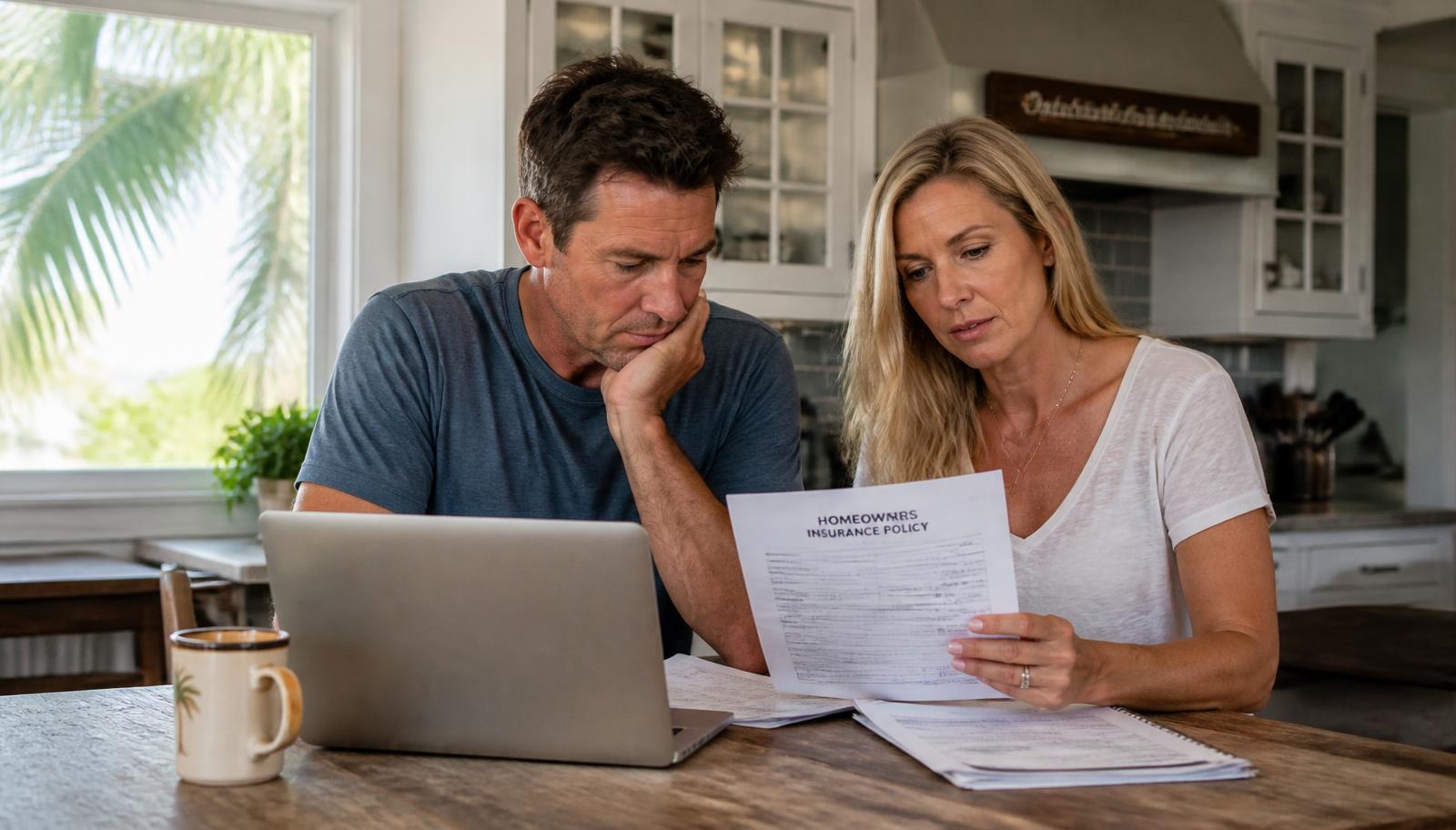
Insurance is supposed to protect you financially when something goes wrong. But having an insurance policy doesn't automatically mean you have the right coverage. In Florida, that distinction is especially important.
Hurricanes, flooding, heavy traffic, rising property values, expensive home repairs, and the unique risks of owning a business in Florida can all create insurance challenges that residents in other states may not face to the same degree.
Unfortunately, many people don't discover gaps in their insurance until they file a claim — and by then it's too late to change the policy for that loss. Whether you're a homeowner, renter, driver, landlord, or business owner, avoiding a few common insurance mistakes can make a major difference in how well you're protected.
1. Shopping for Insurance Based Only on Price
Everyone wants to save money on insurance, but the cheapest policy isn't necessarily the best value. Two quotes that appear similar can have significant differences involving:
- Coverage limits
- Deductibles
- Exclusions
- Optional coverages
- Replacement cost provisions
- Liability protection
- Policy endorsements
Saving a few hundred dollars per year may not be worth it if the cheaper policy leaves you with thousands of dollars in additional exposure after a loss. Instead of asking only "which policy is cheapest?", ask "what am I getting for the price?"
The goal should be finding a balance between affordable premiums and appropriate coverage.
2. Assuming Homeowners Insurance Covers Flooding
This may be the single most important insurance mistake a Florida homeowner can make. Standard homeowners insurance generally does not cover flooding caused by rising water. That can include flooding from:
- Storm surge
- Overflowing canals
- Rivers
- Heavy rainfall accumulating around the property
- Neighborhood drainage systems becoming overwhelmed
Florida residents don't need to live directly on the coast to experience flooding. South Florida's intense rainfall, low elevation, and extensive canal systems can create flood exposure far inland.
Separate Florida flood insurance may be needed to protect your home and belongings against covered flood losses. Related reading: Florida Flood Insurance Guide.
3. Assuming You Don't Need Flood Insurance Because You're Not in a High-Risk Flood Zone
Another common misconception is "my house isn't in a flood zone, so I don't need flood insurance." Every property has some level of flood risk. Flood maps identify different levels of risk, but being outside a high-risk zone doesn't mean flooding can't happen. Localized heavy rain can overwhelm:
- Storm drains
- Streets
- Canals
- Retention ponds
- Neighborhood drainage systems
Before deciding against flood coverage, consider the potential financial impact if several inches of water entered your home. If you couldn't comfortably pay for those repairs yourself, flood insurance deserves consideration.
4. Choosing a Deductible You Can't Afford
Higher deductibles can help reduce insurance premiums, but there's a point where saving money on premiums creates another problem. Imagine choosing a $5,000 deductible to lower your annual premium, and then a covered loss happens tomorrow. Could you comfortably come up with $5,000?
Florida homeowners should pay particular attention to hurricane deductibles, which may be calculated differently from standard homeowners deductibles. Before purchasing a policy, understand:
- Your standard deductible
- Your hurricane deductible
- Any windstorm deductible
- Your flood insurance deductible
- Other special deductibles that may apply
Related reading: how insurance deductibles work.
5. Carrying Only the Minimum Auto Insurance Required
Meeting Florida's legal auto insurance requirements doesn't necessarily mean you have enough financial protection. A serious accident can involve:
- Multiple vehicles
- Significant injuries
- Emergency medical care
- Lost wages
- Expensive vehicle repairs
- Lawsuits
Instead of automatically selecting the lowest available limits, consider your assets, income, driving habits, and overall financial exposure. An insurance professional can help you understand the difference between simply meeting legal requirements and purchasing coverage designed for greater financial protection.
Related reading: Florida auto insurance requirements and car insurance in Florida.
6. Ignoring Uninsured and Underinsured Drivers
You may be a careful driver, but you can't control how much insurance everyone else carries. If you're seriously injured by someone who doesn't have enough insurance — or doesn't have insurance at all — you could face significant expenses.
That's why Florida drivers should understand uninsured and underinsured motorist coverage and discuss available options with their insurance agent. Don't assume the other driver will have enough insurance to cover a serious accident.
7. Forgetting to Update Your Homeowners Insurance
Your home isn't frozen in time. Maybe you've:
- Remodeled your kitchen
- Replaced your roof
- Added a room
- Installed expensive appliances
- Built an outdoor structure
- Upgraded flooring
- Added valuable personal property
Construction and labor costs can also change significantly over time. If your Florida homeowners insurance hasn't been reviewed recently, your coverage may no longer reflect your current situation.
Related reading: Florida Homeowners Insurance Guide.
8. Confusing Market Value With Replacement Cost
Your home's market value and its replacement cost aren't necessarily the same thing. Market value can reflect:
- Location
- Land value
- Neighborhood demand
- Real estate conditions
- School districts
- Nearby amenities
Replacement cost focuses more on what it could cost to rebuild the insured structure following a covered loss. A home that sells for $700,000 doesn't automatically need exactly $700,000 of dwelling coverage — and a home worth less on the real estate market could potentially cost more than expected to rebuild.
Insurance coverage should be based on appropriate insurance valuation methods, not simply an online estimate or the purchase price.
9. Assuming Your Landlord's Insurance Protects Your Belongings
A landlord's insurance typically protects the building owner's property and liability interests — not the tenant's personal possessions. If a covered event damages your furniture, clothing, television, computer, electronics, or other belongings, you may need your own renters insurance in Florida for protection.
Renters insurance can also provide personal liability coverage, depending on the policy. Related reading: Florida Renters Insurance Guide.
10. Not Considering Umbrella Insurance
Many people hear "umbrella insurance" and assume it's only for wealthy households. That's not necessarily true. A serious liability claim can exceed the limits of your homeowners or auto insurance, and umbrella insurance provides an additional layer of liability protection above qualifying underlying policies. Consider discussing it if you:
- Own a home
- Have significant savings
- Own multiple vehicles
- Have teenage drivers
- Own rental properties
- Have a swimming pool
- Own certain recreational vehicles
- Have significant future earning potential
Related reading: Florida umbrella insurance: do you need it?
11. Using a Personal Auto Policy for Significant Business Driving
If you use your vehicle extensively for business, don't automatically assume your personal auto policy provides all the protection you need. Commercial use can create different risks. Examples include:
- Contractors carrying tools between job sites
- Delivery drivers
- Mobile service businesses
- Employees driving company vehicles
- Businesses transporting equipment
- Companies operating fleets
Depending on how the vehicle is used, commercial auto insurance in Florida may be appropriate. Related reading: Commercial Auto Insurance Florida: Complete Guide.
12. Assuming General Liability Covers Every Business Risk
General liability insurance is extremely important, but it isn't universal business protection. A standard policy may not adequately cover risks involving:
- Professional errors
- Employee injuries
- Commercial vehicle accidents
- Cyberattacks
- Flooding
- Damage to certain tools or equipment
- Employment practices claims
- Specialized industry exposures
A consultant may need professional liability insurance. A contractor may need inland marine coverage for tools. A company with employees may need workers' compensation.
Related reading: Florida General Liability Insurance Guide and workers' compensation in Florida.
13. Forgetting About Business Property That Travels
Many Florida contractors and service businesses carry thousands — or tens of thousands — of dollars worth of equipment in their trucks and vans. For example:
- Power tools
- Diagnostic equipment
- Generators
- Compressors
- Welders
- Construction equipment
- Specialized machinery
Commercial auto insurance primarily protects the vehicle and associated auto liability exposures. Business property that moves between locations may require inland marine insurance or another specialized form of property coverage.
If your livelihood depends on the tools in your truck, make sure you understand how they're insured.
14. Waiting Until Hurricane Season to Review Your Insurance
The worst time to discover an insurance problem is when a hurricane is already approaching Florida. Insurance companies may restrict new policies or coverage changes when a named storm threatens an area. Your pre-season review should include:
- Homeowners insurance
- Hurricane deductible
- Windstorm coverage
- Flood insurance
- Auto comprehensive coverage
- Commercial property coverage
- Business interruption coverage
You should also keep an updated inventory of important property and store policy information somewhere accessible. Being prepared before the storm is far easier than trying to make changes when everyone else is doing the same thing.
15. Buying Insurance and Never Reviewing It Again
You buy insurance, automatic payments begin, renewal documents arrive, and years pass. Meanwhile, your life changes. Maybe you:
- Bought another vehicle
- Got married
- Purchased a home
- Renovated your property
- Started a business
- Hired employees
- Bought expensive equipment
- Added a teenage driver
- Purchased a boat or recreational vehicle
- Increased your savings and investments
- Acquired rental property
An annual insurance review doesn't necessarily mean changing companies or buying more coverage. Sometimes your existing coverage is perfectly appropriate. The point is to make sure you know what you have and that it still matches your current needs.
Bonus Mistake: Not Understanding What Your Policy Actually Covers
Insurance policies aren't light reading, but you should understand the basics of what you're buying. At minimum, know your:
- Coverage limits
- Deductibles
- Major exclusions
- Liability limits
- Property limits
- Named insureds
- Covered vehicles and properties
- Important endorsements
If something doesn't make sense, ask. A good insurance agent shouldn't simply sell you a policy — they should help you understand what that policy is designed to do.
How Often Should Florida Residents Review Their Insurance?
A good rule of thumb is to review your major insurance policies at least once a year, and again after major life or business changes. For individuals, that might include:
- Buying a home
- Moving
- Purchasing a vehicle
- Getting married
- Adding a young driver
- Renovating your home
For businesses, it might include:
- Hiring employees
- Buying vehicles
- Purchasing equipment
- Adding locations
- Offering new services
- Signing large contracts
- Significant revenue growth
Insurance works best when the coverage reflects your actual circumstances. Related reading: Florida business insurance checklist.
Should You Always Choose the Insurance Company With the Lowest Quote?
No. Price matters, but it should be only one part of your decision. When comparing insurance quotes, look at:
- Coverage limits: are they actually the same?
- Deductibles: is the cheaper policy shifting significantly more risk to you?
- Exclusions: what isn't covered?
- Optional coverages: are important protections missing?
- Carrier: is the insurance company appropriate for your particular risk?
- Service: will someone be available to help you understand your policy?
A $200 annual savings isn't necessarily a bargain if you're giving up thousands of dollars worth of meaningful protection. Compare coverage first, then compare price.
Why Work With an Independent Insurance Agent?
Buying insurance directly from a single company can be convenient, but you're limited to the products and pricing that company offers. An independent insurance agent may have access to multiple carriers, making it easier to compare coverage, deductibles, liability limits, policy features, eligibility requirements, and pricing.
That can be particularly useful when you need several different types of insurance — auto, homeowners, flood, umbrella, commercial auto, general liability, and workers' compensation. Having an insurance professional review the bigger picture can help identify gaps that might otherwise be overlooked.
Related reading: independent insurance agent vs. buying direct.
Frequently Asked Questions About Insurance in Florida
What is the biggest insurance mistake Florida homeowners make?
One of the biggest is assuming homeowners insurance covers flood damage. Standard homeowners policies generally exclude flooding caused by rising water, so separate flood insurance may be necessary.
Should I choose the highest deductible to lower my insurance premium?
Not automatically. A higher deductible can reduce premiums, but you should make sure you could comfortably afford that deductible following a covered loss.
How often should I shop for insurance?
It's reasonable to review your insurance at least annually or whenever you experience a significant life or business change. That doesn't mean you need to switch carriers every year.
Do I need umbrella insurance if I'm not wealthy?
Possibly. Umbrella insurance isn't exclusively for wealthy households. Homeowners, landlords, families with young drivers, and others with significant liability exposure may benefit from additional protection.
Does homeowners insurance cover hurricane flooding?
Wind-related hurricane damage and flood damage are different insurance exposures. Homeowners insurance may cover certain wind-related losses, while flooding caused by rising water generally requires separate flood insurance.
Does my personal auto insurance cover business use?
It depends on the nature and extent of the business use and the terms of your policy. If you regularly use a vehicle for commercial activities, discuss the situation with an insurance professional to determine whether commercial auto coverage is appropriate.
Avoid Insurance Surprises Before They Become Expensive Problems
The purpose of insurance isn't simply to satisfy a legal requirement or get the lowest monthly payment — it's to protect you financially when something goes wrong. In Florida, residents face a combination of risks that makes understanding your coverage particularly important.
At Tammy Insurance, we help Florida individuals, families, homeowners, drivers, and business owners understand their options and identify potential coverage gaps. As an independent agency, we can compare coverage from multiple carriers and find solutions suited to your needs. Contact Tammy Insurance or request a personalized insurance review and quote.