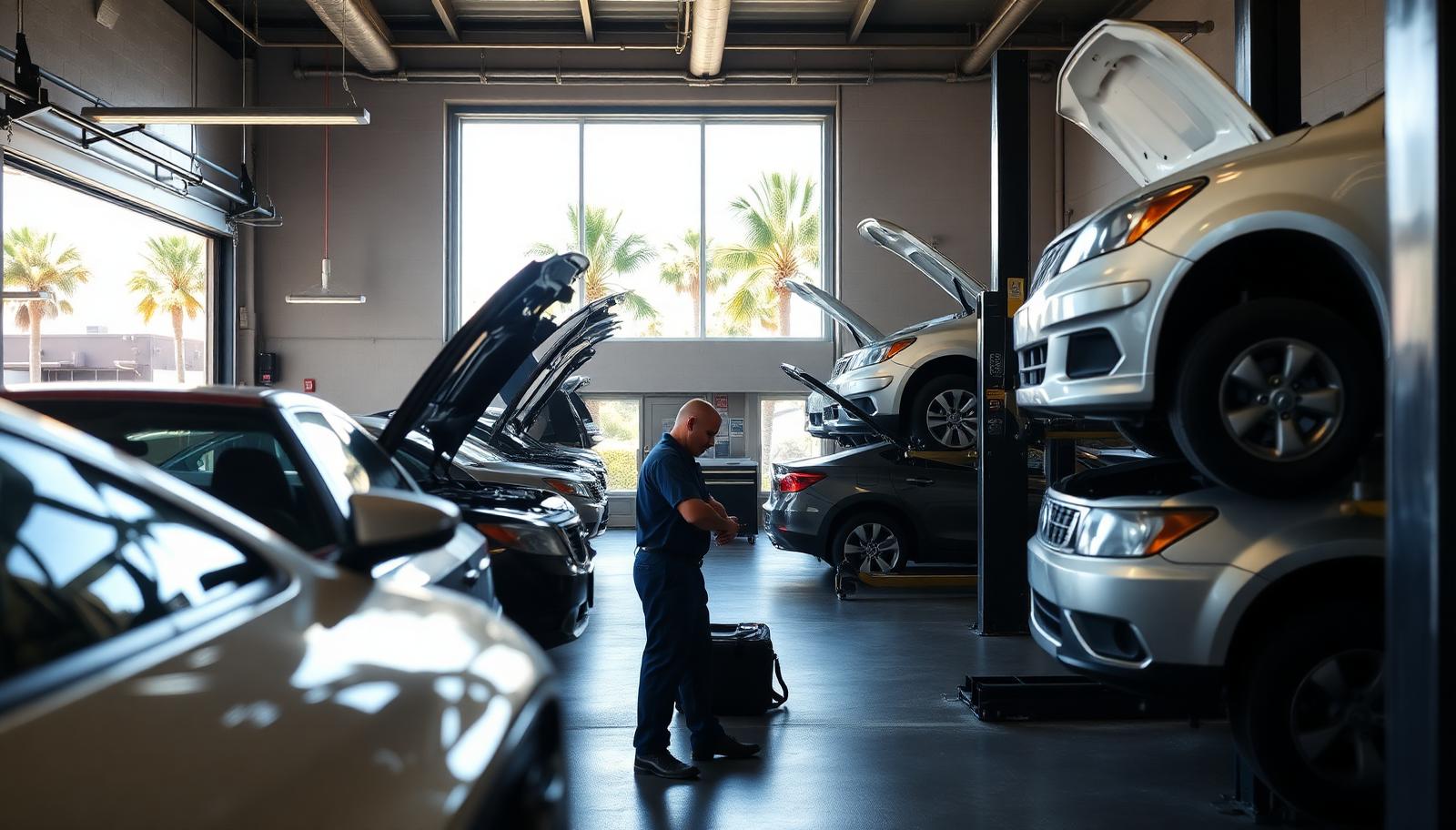
Running an automotive business creates risks that ordinary commercial insurance may not fully address. An auto repair shop can accidentally damage a customer's property. A dealership employee can cause an accident during a test drive. A customer can slip and fall in a service waiting area. A mechanic can make a mistake while moving a vehicle around the shop.
Then there's another major concern: what happens if a customer's vehicle is damaged while it's in your possession?
Garage liability insurance is designed for businesses whose operations involve selling, servicing, repairing, parking, towing, or otherwise working with automobiles. But it's commonly confused with garagekeepers insurance — and they are not the same thing. Understanding the difference can help repair shops, dealers, towing companies, and body shops avoid a major coverage gap.
What Is Garage Liability Insurance?
Garage liability insurance is specialized liability coverage designed for businesses engaged in automotive-related operations. These may include businesses that:
- Repair vehicles
- Service vehicles
- Sell vehicles
- Tow vehicles
- Park or store vehicles
- Perform maintenance
- Install automotive equipment
Garage coverage exists because automotive businesses have unusual liability exposures that don't fit neatly into an ordinary general liability policy. A repair shop isn't simply operating a retail storefront. Employees may drive customers' vehicles, move cars around a parking lot, perform road tests, work underneath vehicles, operate lifts, install parts, and handle expensive customer property.
That creates a combination of premises liability, business operations liability, and automobile liability risks.
Florida's insurance-agent examination materials specifically identify the Garage Coverage Form, garagekeepers insurance, and liability insurance as specialized commercial insurance concepts.
Who Needs Garage Liability Insurance?
Garage liability coverage may be appropriate for many automotive businesses, including:
- Auto repair shops
- Body shops
- Car dealerships
- Used-car dealers
- Tire shops
- Oil-change businesses
- Transmission shops
- Brake shops
- Towing companies
- Service stations
- Detail businesses
- Automotive accessory installers
- Mobile auto-service businesses
- Vehicle storage operations
The exact insurance package depends on the company's operations. A small independent mechanic working on five cars a week presents a different risk from a dealership employing dozens of technicians and salespeople.
However, both may have exposures that ordinary business insurance alone doesn't adequately address. Our Florida business insurance checklist is a helpful starting point.
What Does Garage Liability Insurance Cover?
Coverage varies by policy and insurer, but garage liability insurance generally focuses on liability arising from automotive business operations.
Bodily Injury
Suppose a customer walks into your repair shop and slips on an oil-covered floor. The customer suffers a serious injury and files a claim against your business. Garage liability coverage may help address qualifying:
- Medical-related damages
- Legal defense expenses
- Settlements
- Court judgments
All subject to policy terms and limits.
Property Damage Liability
Garage liability insurance may also protect against certain damage your business causes to property belonging to others. For example, a mechanic moving a customer's vehicle accidentally hits a neighboring building, or an employee damages another person's property while performing garage operations. The exact coverage depends on the circumstances and policy.
Auto Liability From Garage Operations
Automotive businesses often need liability protection when employees operate vehicles as part of normal business activities, such as:
- Test driving a repaired vehicle
- Moving a vehicle between shop locations
- Driving inventory at a dealership
- Picking up or delivering a vehicle
- Road-testing a customer's car
This is one of the reasons garage insurance is different from an ordinary general liability policy — auto-related liability is a central part of the exposure.
Garage Liability vs. Garagekeepers Insurance
This is the most important distinction in this entire guide. Garage liability and garagekeepers coverage protect different risks.
Garage Liability Insurance
Garage liability generally protects the business against certain liability claims arising from its operations. Think: the business causes injury or property damage.
Garagekeepers Insurance
Garagekeepers coverage is designed to protect customers' vehicles while they're in your care, custody, or control for purposes such as repair, service, parking, or storage. Progressive Commercial describes garagekeepers legal liability coverage as protection for customer vehicles damaged by events such as fire, theft, vandalism, or collision while the vehicle is being kept for service or storage.
A garage liability policy should not automatically be assumed to pay for damage to the customer's automobile you're working on. That's the role garagekeepers coverage is designed to address.
Related reading: our garage liability and garagekeepers insurance service page.
A Simple Garage Liability vs. Garagekeepers Example
Imagine you operate a repair shop in Miami. A customer leaves a BMW with you overnight for repairs. During the night, two different things happen.
Scenario 1
A customer visiting your shop slips on a wet floor and breaks an arm. That's primarily a liability claim involving your business operations. Garage liability may respond, subject to the policy.
Scenario 2
A fire damages the BMW you were storing overnight. Now the issue involves a customer's vehicle in your care, custody, or control. Garagekeepers coverage may be the applicable protection.
That's why many automotive businesses need both types of coverage rather than choosing one or the other.
Does Garage Liability Cover Customer Vehicles?
This is where many shop owners get into trouble. Don't assume that simply purchasing garage liability insurance means every customer's vehicle is fully covered. Damage to a customer's vehicle while it is:
- Being repaired
- Parked at your shop
- Stored overnight
- Being serviced
- In your possession
may require garagekeepers coverage. The Hartford similarly describes garagekeepers insurance as protection designed for customer vehicles while they're being maintained by the business.
If your business routinely takes possession of customers' cars, this coverage deserves serious attention.
What Does Garagekeepers Insurance Cover?
Garagekeepers policies can be written in different ways, but covered events may include qualifying:
- Fire
- Theft
- Vandalism
- Collision
- Certain weather-related losses
For example, a customer's truck is parked inside your body shop overnight when a covered fire damages the building and vehicle. Garagekeepers insurance may help address the customer vehicle loss, subject to policy terms.
Legal Liability vs. Direct Primary Garagekeepers Coverage
Legal Liability Coverage
This generally responds when the garage is legally liable for the customer's vehicle damage — for example, an employee negligently crashes the customer's car while moving it.
Direct Primary Coverage
Depending on the policy, direct primary garagekeepers coverage may provide broader protection for covered damage to customer vehicles even when the business isn't legally responsible. The exact options vary by carrier.
This distinction matters because a policy written on a legal-liability basis may handle losses differently from one written on a direct-primary basis. Ask your insurance agent exactly which form you're being quoted.
What About Direct Excess Coverage?
Some garagekeepers policies may also be structured on a direct excess basis. Under this type of structure, other applicable insurance may respond first before the garagekeepers policy contributes.
These differences can significantly affect how claims are handled. Don't compare two garagekeepers quotes solely by price — make sure you're comparing the same coverage basis.
Garage Liability vs. General Liability Insurance
Auto businesses sometimes assume a standard general liability policy is enough. It may not be. General liability insurance typically addresses certain claims involving:
- Third-party bodily injury
- Third-party property damage
- Personal and advertising injury
But automotive operations involve additional auto-related exposures. Ordinary general liability insurance generally isn't designed around employees constantly test-driving customers' cars. Garage insurance is.
Related reading: our Florida general liability insurance guide.
Do Auto Repair Shops Need Garage Liability Insurance?
Auto repair shops are one of the most obvious businesses that should consider specialized garage coverage. A typical repair shop may maintain custody of customer vehicles, employ multiple mechanics, move vehicles around the property, perform test drives, store customer cars overnight, use lifts and heavy equipment, and perform potentially safety-critical repairs.
A complete Florida auto repair shop insurance program might include:
- Garage liability
- Garagekeepers
- Commercial property
- Workers' compensation
- Commercial umbrella
- Inland marine
- Equipment breakdown
The right combination depends on the operation.
Garage Liability Insurance for Car Dealerships
Dealerships have another specialized risk profile. Employees and customers frequently operate vehicles owned by the dealership, through activities such as:
- Customer test drives
- Employee demonstrations
- Vehicle delivery
- Moving inventory
- Road testing
Dealerships may also need coverage for their vehicle inventory, often called dealer's open lot or similar specialized coverage depending on the carrier.
Florida dealer licensing requirements can also include specific insurance obligations depending on dealer type and operations, so dealers should verify current licensing requirements rather than relying on a generic business policy.
Garage Liability Insurance for Towing Companies
A towing company may operate commercial tow trucks, transport customer vehicles, store impounded vehicles, handle damaged cars, and enter accident scenes. The company's insurance program may need to address:
- Tow truck auto liability
- Customer vehicles
- On-hook towing exposure
- Garagekeepers
- Property
- Workers' compensation
A simple general liability policy is unlikely to address every one of these risks. Related reading: commercial auto insurance in Florida.
Garage Liability Insurance for Body Shops
Body shops frequently hold customer vehicles for days or weeks. Vehicles may remain inside the building, in fenced lots, outside overnight, or partially disassembled. That creates exposure to:
- Theft
- Fire
- Storm damage
- Vandalism
- Collision
Garagekeepers protection can therefore be especially important alongside garage liability insurance.
Garage Insurance for Mobile Mechanics
Mobile mechanics may not operate from a traditional repair shop, but that doesn't eliminate liability exposure. A mobile mechanic could damage a customer's vehicle, damage property at a customer's home, cause an accident while road-testing a vehicle, or injure someone during repair operations. They may also carry thousands of dollars worth of tools and diagnostic equipment.
Depending on the business, insurance could include:
- Automotive liability coverage
- General or garage liability
- Inland marine
- Commercial auto
- Workers' compensation
Related reading: inland marine insurance explained.
Does Garage Liability Cover Faulty Work?
Suppose a technician incorrectly installs a brake component and the part later fails. Insurance treatment may depend on exactly what was damaged and why. Commercial liability insurance generally contains exclusions relating to the insured's own defective work or product, although resulting damage may be treated differently depending on the policy and circumstances.
Do not assume garage liability is a warranty for poor workmanship. Insurance isn't intended to replace the business's responsibility to perform repairs correctly. Review completed-operations and defective-work provisions carefully with your agent.
What About Completed Operations?
Some claims occur after the vehicle leaves the shop. A customer picks up their car, and several hours later a component that was serviced fails and contributes to an accident. That creates a potential completed operations exposure.
Automotive businesses should discuss how their policy handles liability claims arising after repair work has been completed. This is especially important for shops performing safety-related repairs such as:
- Brakes
- Steering
- Suspension
- Tires
Does Garage Liability Cover Employee Injuries?
Generally, employee work-related injuries are a separate workers' compensation issue. Imagine a technician is injured while lifting a transmission, working underneath a vehicle, operating shop equipment, or moving heavy tires.
Garage liability shouldn't be treated as a substitute for workers' compensation. Florida businesses should determine whether workers' compensation coverage is required based on their industry and number of employees.
Related reading: workers' compensation in Florida.
Does Garage Liability Cover Shop Tools?
Not generally as business-property coverage. Your diagnostic scanners, toolboxes, lifts, computers, welders, alignment equipment, and tire machines are property exposures. They may require commercial property or inland marine insurance depending on where and how they're used.
Related reading: commercial property insurance in Florida.
Tools Taken Off-Site
If technicians or mobile mechanics routinely take valuable equipment away from the shop, commercial property insurance may have limitations. Inland marine insurance can help protect qualifying tools and equipment while they're:
- In a service truck
- Traveling between locations
- At a customer's property
- Temporarily stored away from the business
Related reading: inland marine insurance for Florida businesses.
Does Garage Liability Cover the Business's Own Vehicles?
Vehicles owned by your business may require their own auto coverage. A repair shop may own parts-delivery vehicles, service trucks, courtesy cars, or tow vehicles.
These should be disclosed properly when the insurance program is structured. Don't assume one policy automatically covers every automobile associated with the company — review your commercial auto insurance alongside garage coverage.
Courtesy Cars and Loaner Vehicles
Repair shops and dealerships sometimes provide customers with loaner vehicles. That creates another auto liability exposure. Before offering loaners, businesses should verify:
- Who is authorized to drive
- How liability insurance applies
- Physical damage coverage
- Driver-screening procedures
- Rental or loan agreements
A casual arrangement where customers simply borrow the shop car can create unnecessary risk.
Test Drives and Road Tests
Test drives are a normal part of automotive business operations. A mechanic may need to road-test a vehicle before repair, during diagnosis, or after repair. An accident during a road test could involve customer vehicle damage, damage to another person's property, or bodily injury.
Your insurance program should address both liability resulting from the accident and potential damage to the customer's vehicle. That may involve more than one coverage section.
Customer Vehicles Stored Overnight
Vehicles left overnight create increased exposure. They can be damaged by theft, vandalism, fire, storms, or other vehicles. Businesses should evaluate:
- Garagekeepers limits
- Maximum number of vehicles
- Maximum value per vehicle
- Total values at risk
A shop that normally has ten ordinary vehicles on-site presents a very different exposure from a specialty shop storing several exotic cars.
High-Value and Exotic Vehicles
If your business works on Ferraris, Lamborghinis, Porsches, high-end Mercedes-Benz vehicles, collector cars, or custom vehicles, standard garagekeepers limits may not be sufficient.
Imagine five customer vehicles worth $200,000 each being stored in the same building. That's $1 million of customer-property exposure before accounting for anything else. Insurance limits should reflect the vehicles you realistically expect to have in your custody.
Florida Hurricanes and Garage Insurance
Florida automotive businesses also face severe-weather exposure. A hurricane could damage customer vehicles, the repair shop, tools, equipment, inventory, and business-owned vehicles.
No single insurance policy necessarily covers all of these assets. Customer automobiles may involve garagekeepers. The building and shop equipment may involve commercial property insurance. Flood damage may require separate flood insurance.
That's why Florida garage businesses should review their complete insurance package before hurricane season. Related reading: flood insurance in Florida.
Does Garagekeepers Cover Flood Damage?
It depends on the policy. Some garagekeepers policies may cover certain causes of loss while excluding or restricting others. Never assume flood is automatically included.
For Florida businesses storing dozens of customer vehicles in a low-lying area, this is an important question to ask explicitly. The same applies to wind, named storms, and hurricanes — review policy wording and deductibles carefully.
Commercial Umbrella Insurance for Auto Businesses
A serious accident can exceed the liability limits of an underlying policy. A commercial umbrella or excess liability policy may provide additional limits above qualifying underlying coverage. This can be worth considering for businesses with:
- Frequent road tests
- Many employees
- Significant customer traffic
- High-value assets
- Large dealership operations
A major bodily injury lawsuit can become extremely expensive. Related reading: Florida umbrella insurance — do you need it?
Cyber Insurance for Repair Shops and Dealerships
Automotive businesses increasingly store digital customer information — names, addresses, phone numbers, email addresses, payment information, and vehicle information. Dealerships may hold even more sensitive financial information.
A complete insurance review should therefore consider cyber liability exposure as well as physical garage risks.
How Much Garage Liability Insurance Do You Need?
There is no universal limit suitable for every automotive business. Consider factors such as:
- Number of employees
- Number of customer vehicles
- Average vehicle value
- Maximum vehicles stored at once
- Frequency of test drives
- Annual revenue
- Property exposure
- Business assets
- Contract requirements
A one-person repair shop may need a very different policy from a large dealership.
Garagekeepers Limits Matter Too
Don't evaluate only your garage liability limit. Calculate how much customer property you have in your custody. For example, an average customer vehicle value of $35,000 with a maximum of 15 vehicles on-site overnight represents roughly $525,000 of potential vehicle value.
And that's only an example. A luxury or specialty repair business could have dramatically higher exposure.
What Affects the Cost of Garage Liability Insurance?
Insurance companies may consider factors such as:
- Type of automotive business
- Location
- Annual revenue
- Payroll
- Number of employees
- Driver records
- Number of vehicles
- Customer vehicle values
- Claims history
- Coverage limits
- Deductibles
- Security measures
- Services performed
A tire shop, towing company, auto body shop, and new-car dealership will not necessarily receive similar pricing because their operations are different. Understanding how insurance deductibles work can help you compare quotes fairly.
Ways Automotive Businesses Can Reduce Risk
Insurance is only part of protecting your company. Strong operational practices can reduce claims.
Screen Employees Who Drive
Review driving records for employees who test-drive vehicles, tow cars, or operate company vehicles.
Use Written Road-Test Procedures
Establish rules for who may drive, approved routes, vehicle condition checks, and speed and safety expectations.
Improve Shop Security
Consider cameras, fencing, lighting, alarm systems, and secure key storage.
Document Vehicle Condition
When customers drop off vehicles, document existing scratches, dents, mileage, and overall vehicle condition. Photos can help prevent disputes later.
Secure Keys
Leaving dozens of customer keys somewhere easily accessible creates unnecessary theft exposure. Create controlled procedures for key storage.
Common Garage Liability Insurance Mistakes
- Assuming general liability is enough
- Confusing garage liability with garagekeepers
- Failing to insure customer vehicles properly
- Carrying garagekeepers limits that are too low
- Forgetting test-drive exposure
- Not screening employee driving records
- Assuming shop tools are covered by garage liability
- Failing to address mobile equipment
- Ignoring hurricane and flood risks
- Not reviewing coverage after business growth
- Assuming faulty workmanship is automatically covered
- Choosing coverage based only on price
Related reading: insurance mistakes Florida residents make.
Review Coverage as Your Automotive Business Grows
An insurance package that worked when you opened may become inadequate later. Perhaps you hire more technicians, begin towing, add body work, expand vehicle storage, start working on expensive cars, add a second location, buy service vehicles, or begin offering loaner cars.
Each change creates different exposure. Review insurance at least annually and whenever your operations change significantly.
Why Work With an Independent Insurance Agent?
Garage insurance is highly specialized. It's not simply a matter of buying a generic liability policy and opening the doors. A knowledgeable independent agent can help coordinate:
- Garage liability
- Garagekeepers
- Commercial property
- Commercial auto
- Workers' compensation
- Inland marine
- Commercial umbrella
- Flood coverage
and compare available insurance companies. The goal isn't merely to find the cheapest garage insurance — it's to understand what could realistically happen to your business and make sure those risks have been properly considered.
Related reading: independent insurance agent vs. buying direct.
Frequently Asked Questions About Garage Liability Insurance
What is garage liability insurance?
Garage liability insurance is specialized coverage designed for automotive businesses and can provide protection against certain bodily injury, property damage, and automobile-related liability claims arising from garage operations.
What is the difference between garage liability and garagekeepers insurance?
Garage liability primarily protects the business against qualifying liability claims arising from operations. Garagekeepers insurance protects customers' vehicles while they're in the business's care, custody, or control, subject to policy terms.
Does an auto repair shop need both garage liability and garagekeepers?
Many repair shops may benefit from both because the policies address different risks. One protects the business's liability exposure while the other can protect customer vehicles in its custody.
Does garage liability cover customer cars?
Don't assume it does. Damage to customer vehicles being serviced, parked, or stored may require garagekeepers coverage.
Does garagekeepers insurance cover theft?
Depending on the policy, garagekeepers coverage may protect customer vehicles against covered theft while they're in the business's care.
Does garagekeepers insurance cover fire damage?
It may cover qualifying fire damage to customer vehicles, subject to the policy's terms, limits, and selected coverage form.
Does garage liability cover mechanics' tools?
Not as ordinary business-property coverage. Tools may need commercial property or inland marine protection.
Does garage liability cover employee injuries?
Work-related employee injuries are generally handled through workers' compensation where applicable.
Does garage liability cover test drives?
Garage insurance can be structured to address auto liability arising from garage operations such as road testing, but the exact vehicle and driver circumstances should be reviewed with your insurer.
How much garagekeepers coverage should a shop carry?
The appropriate limit depends on the number and value of customer vehicles that may be in your custody at one time.
Protect Your Automotive Business From the Risks That Come With Every Vehicle
You're not simply protecting an office or storefront. Your company may be responsible for customers, employees, customer vehicles, test drives, tools, equipment, business property, and commercial vehicles — and each one may require a different type of coverage.
The most important distinction to remember is this: garage liability insurance protects against certain liability arising from your automotive business operations, while garagekeepers insurance is designed to protect customers' vehicles while they're in your care, custody, or control. For many repair shops, dealerships, towing companies, and body shops, both can be essential pieces of the insurance program.
At Tammy Insurance, we help Florida automotive businesses review their risks, compare specialized garage insurance options from available carriers, and coordinate liability, garagekeepers, commercial property, commercial auto, workers' compensation, and other coverage.
Looking for garage liability insurance in Florida? Contact Tammy Insurance today for a personalized garage insurance review and quote.