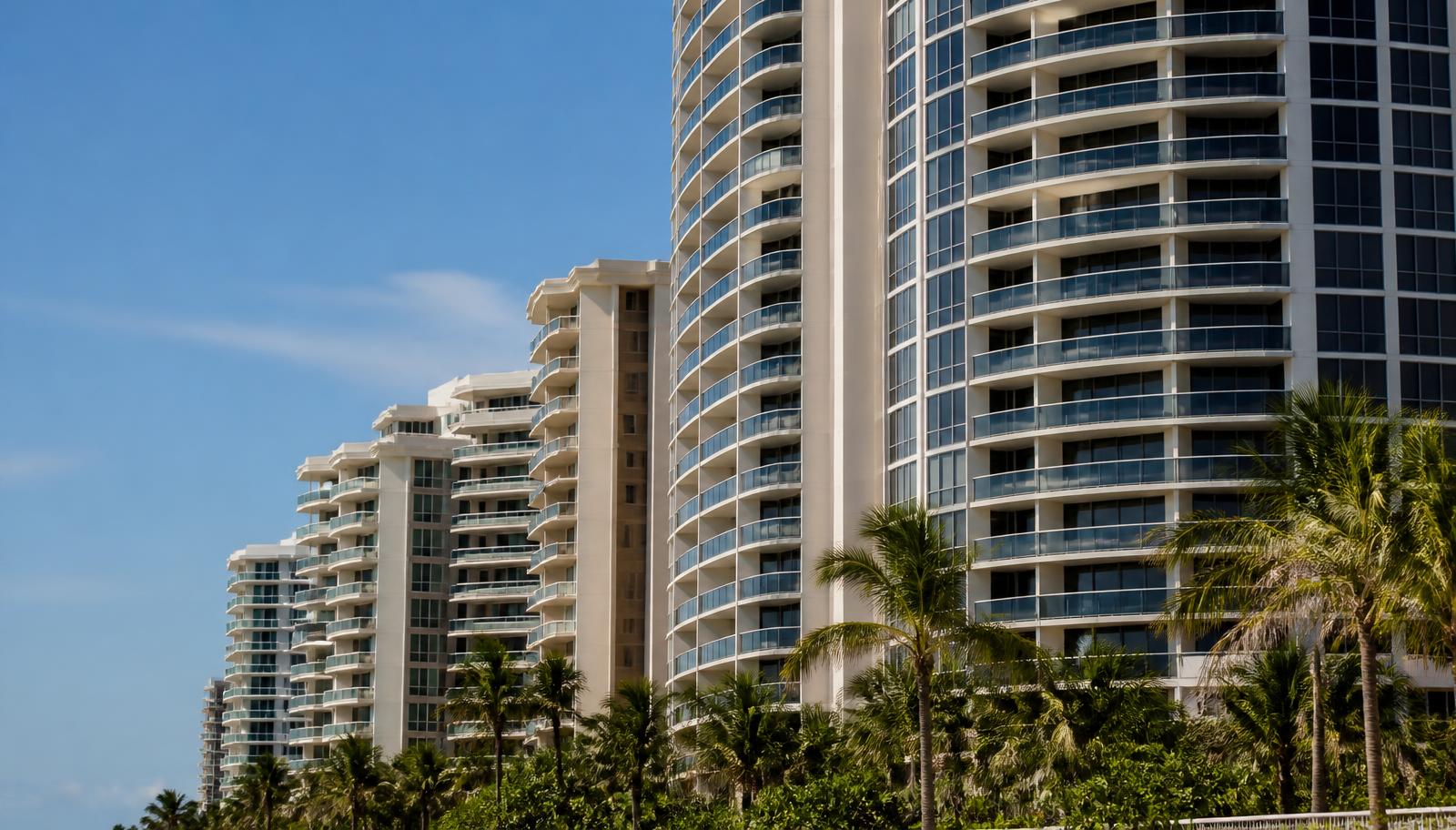
Owning a condo in Florida comes with a different insurance setup than owning a single-family home. Your condominium association typically insures parts of the building and common areas, while you are responsible for insuring certain parts of your individual unit, your belongings, and your personal liability.
That division of responsibility is where confusion often begins. Many Florida condo owners assume that because their association carries a large master insurance policy, they don't need much insurance of their own. Unfortunately, the association's policy may not cover everything inside your unit — and it generally won't protect your furniture, clothing, electronics, or personal liability.
That's why condo owners commonly purchase an HO-6 condo insurance policy. Florida's Office of Insurance Regulation describes HO-6 insurance as coverage for condominium units, sometimes referred to as "walls-in" coverage, because it typically insures certain interior property while the condominium association insures the exterior structure and common property. HO-6 policies generally include building property, personal property, personal liability, and loss-of-use coverage.
Whether you own a condo in Miami, Fort Lauderdale, Palm Beach, Naples, Tampa, Orlando, or elsewhere in Florida, understanding the relationship between your personal policy and your association's insurance can help prevent expensive surprises. If you also own a house, our guide to Florida homeowners insurance covers the single-family side.
What Is Condo Insurance?
Condo insurance is a form of homeowners insurance specifically designed for people who own condominium units. The most common policy form is called an HO-6 policy.
Unlike a traditional homeowners policy, an HO-6 policy usually doesn't insure the entire building because you don't individually own the entire structure. Instead, your condominium association maintains insurance for property the association is responsible for, while your HO-6 policy can protect the portions of your unit and personal property that fall under your responsibility.
The exact dividing line can vary depending on:
- Florida law
- Your condominium declaration
- Association bylaws
- The association's master insurance policy
- Your individual HO-6 policy
That's why condo owners should review both their own insurance and their association's coverage.
Condo Master Policy vs. HO-6 Insurance
This is one of the most important concepts for Florida condo owners to understand.
The Condo Association's Master Policy
Florida condominium associations generally have obligations to maintain property insurance for association property and certain condominium property. Florida law also places responsibility on unit owners for portions of the property they are required to insure. The association's policy may insure things such as:
- Exterior walls
- Roof
- Structural components
- Elevators
- Hallways
- Lobbies
- Stairwells
- Clubhouses
- Pools
- Other common areas
Exactly what the master policy covers depends on the condominium and the policy.
Your HO-6 Condo Policy
Your personal condo insurance may cover items such as:
- Interior improvements
- Certain fixtures
- Personal belongings
- Personal liability
- Additional living expenses
- Loss assessments
In simple terms: the association insures its responsibility, and you insure yours. But never assume you know where that dividing line is without checking your condominium documents and insurance policies.
What Does Florida Condo Insurance Cover?
A typical HO-6 policy contains several important categories of coverage.
1. Dwelling or Building Property Coverage
This portion of condo insurance can protect covered property inside your unit that you're responsible for repairing or replacing. Depending on the association's responsibilities and your policy, this could include:
- Interior walls
- Flooring
- Built-in cabinets
- Countertops
- Certain plumbing fixtures
- Interior doors
- Improvements and upgrades
Suppose you renovated your condo with hardwood floors, custom kitchen cabinets, quartz countertops, and upgraded bathroom fixtures. If your condominium association's policy doesn't insure those items, your HO-6 policy may need sufficient dwelling coverage to protect them.
This is particularly important for renovated condos. A unit that originally contained $20,000 of builder-grade interior finishes may contain significantly more value after a major renovation.
2. Personal Property Coverage
Your condominium association's insurance generally does not insure your personal possessions. Personal property coverage can help protect things such as:
- Furniture
- Clothing
- Televisions
- Computers
- Electronics
- Kitchenware
- Appliances you own
- Decorations
- Other personal belongings
Imagine a covered fire damages your condo. The association may repair insured portions of the building, but it isn't going to replace your sofa, television, clothing, laptop, or bedroom furniture. That's where your personal property coverage becomes important.
3. Personal Liability Coverage
Condo insurance isn't only about protecting property — it can also protect you against certain liability claims. For example, imagine a guest is injured inside your unit and claims your negligence caused the accident. Personal liability coverage may help pay for covered legal defense costs, medical-related damages, settlements, and judgments up to your policy limits.
4. Medical Payments to Others
Many HO-6 policies provide a limited amount of medical payments coverage for qualifying injuries to guests. This coverage can sometimes help pay smaller medical expenses without requiring a liability lawsuit. Terms and limits vary by insurer.
5. Loss of Use Coverage
What happens if your condo becomes temporarily uninhabitable after a covered loss? Loss of use, also called additional living expense coverage in many policies, may help with qualifying expenses such as hotel bills, temporary rental housing, certain increased food costs, and other additional living expenses, subject to policy limits and terms.
For condo owners in expensive areas such as Miami and Miami Beach, temporary housing costs can add up quickly.
6. Loss Assessment Coverage
Loss assessment coverage deserves special attention for condominium owners. A condominium association can sometimes assess unit owners for expenses associated with certain losses affecting association property.
For example, imagine a covered event damages common property and the association's insurance doesn't cover the full amount. The association may levy an assessment against individual owners. Loss assessment coverage may help reimburse a unit owner for certain covered assessments, subject to policy terms and limits. The Insurance Information Institute describes this coverage as protection for a unit owner's share of an association assessment resulting from a covered loss.
Florida law also contains specific requirements governing loss assessment coverage in condominium unit-owner policies. This coverage is important — but it doesn't mean every special assessment imposed by your condo association is automatically insured.
Does Condo Insurance Cover Special Assessments?
Sometimes — but certainly not always. Florida condominium owners have become increasingly familiar with special assessments for expenses such as:
- Structural repairs
- Roof replacement
- Concrete restoration
- Building maintenance
- Reserve funding
- Insurance deductibles
Your HO-6 loss assessment coverage doesn't automatically pay every assessment imposed by your association. Coverage generally depends on whether the assessment resulted from a type of loss covered by your policy and whether the policy's other conditions are satisfied.
For example, a routine assessment to replace an aging roof because it reached the end of its useful life would be very different from an assessment arising from qualifying damage caused by a covered event. Always review the specific assessment and policy with your insurance professional.
Hurricane Coverage for Florida Condos
Florida condo owners understandably worry about hurricanes. An HO-6 policy may provide coverage for certain hurricane or wind-related losses, subject to the specific policy, exclusions, and deductibles. Possible covered damage could include:
- Wind damage to insured interior property
- Wind-driven damage to personal property under covered circumstances
- Damage from falling objects
- Other qualifying hurricane-related losses
However, hurricane coverage is not the same thing as flood coverage — a distinction that's extremely important in Florida. For more on what drives property premiums statewide, see why Florida home insurance is so expensive.
Hurricane Deductibles for Condo Insurance
Your condo policy may have a separate hurricane deductible that works differently from your standard deductible. Depending on the policy, the deductible may be expressed as a dollar amount or a percentage of applicable insured value.
Before hurricane season, review your declarations page and determine exactly what your hurricane deductible is. A deductible that looks small as a percentage can translate into a substantial dollar amount. Related reading: how insurance deductibles work.
Does Florida Condo Insurance Cover Flooding?
Standard condo insurance generally does not cover flooding caused by rising water. That's one of the most important gaps Florida condo owners need to understand. Flooding can result from:
- Storm surge
- Heavy rainfall
- Overflowing canals
- Coastal flooding
- Rising rivers or lakes
- Drainage systems being overwhelmed
Flood damage typically requires separate Florida flood insurance. Our flood insurance guide explains how those policies work.
Do Upper-Floor Condo Owners Need Flood Insurance?
A condo owner living on the 12th floor may reasonably wonder how floodwater could ever reach their unit. Your direct flood risk may be different from someone living on the ground floor — but that doesn't automatically make flood insurance irrelevant. A flood can damage:
- Building electrical systems
- Elevators
- Lower-level mechanical equipment
- Parking garages
- Common areas
- Access to the building
There can also be complexities involving personal property, association losses, and assessments. Whether flood insurance makes sense depends on the property, your location, the building, lender requirements, and your personal financial situation.
What About Citizens and Flood Insurance Requirements?
Florida has expanded flood-insurance requirements for many Citizens Property Insurance Corporation policyholders in recent years. However, Florida law specifically exempts policies written under a condominium unit owners form from Citizens' general flood-insurance mandate.
That's a useful distinction for condo owners to know. An exemption from a requirement, however, doesn't mean the property has no flood risk. You should still decide whether separate flood insurance makes sense based on your actual exposure.
What Condo Insurance Doesn't Usually Cover
HO-6 policies aren't designed to cover every possible loss. Common exclusions or limitations may involve:
- Flooding
- Earth movement
- Normal wear and tear
- Neglected maintenance
- Insects or pests
- Intentional damage
- Certain high-value belongings above policy sublimits
- Business property beyond specified limits
Policy exclusions vary, so always read your specific contract.
Water Damage in a Condo Can Get Complicated
Water damage can become particularly complicated in condominiums because several parties may be involved. For example, a pipe breaks inside a unit on the 10th floor and water damages that unit, the unit below, hallway drywall, electrical components, and flooring.
Determining who pays for what may involve:
- The association's insurance
- One or more unit-owner policies
- Condominium governing documents
- Cause of the damage
- Potential negligence
- Deductibles
This is another reason condo owners shouldn't rely entirely on the association's policy.
Do You Need Condo Insurance If You Paid Cash?
Maybe your lender isn't requiring insurance because you own the condo outright. That doesn't mean going uninsured is a good idea. Without an HO-6 policy, you may be personally responsible for:
- Damage to your interior property
- Replacement of personal belongings
- Liability claims
- Temporary living expenses
- Certain assessments
The absence of a mortgage requirement doesn't eliminate the financial risk.
Do Mortgage Companies Require Condo Insurance?
Mortgage lenders commonly require insurance when financing a condominium unit. The lender may review both your association's master policy and your individual HO-6 policy. Requirements can vary based on the lender, condominium, loan type, and master-policy structure.
If you're purchasing a condo, begin the insurance process before closing rather than leaving it until the last minute. Our guide to insurance for first-time home buyers in Florida walks through that timeline.
How Much Condo Insurance Do You Need?
There's no single coverage amount that's right for every Florida condo owner. Consider at least four major areas.
Interior Reconstruction Cost
How much would it cost to rebuild the interior portions you're responsible for? Consider flooring, cabinets, countertops, interior walls, fixtures, and upgrades. A heavily renovated unit may need much more dwelling coverage than an original builder-grade unit.
Personal Property
Estimate the replacement value of everything you own inside the unit. Walk through each room and consider:
- Furniture
- Electronics
- Clothing
- Kitchen items
- Artwork
- Sporting equipment
- Computers
- Jewelry
People often underestimate how much it would cost to replace everything at once.
Liability Protection
Consider your assets and financial exposure. Someone with significant savings, investments, or income may want higher personal liability limits. For additional protection, a qualifying personal umbrella policy may be worth considering — see our guide to umbrella insurance in Florida.
Loss Assessment Coverage
Review your association's master policy, deductibles, and your individual loss assessment limit. Don't simply accept the lowest available limit without understanding what financial exposure it leaves you with.
Actual Cash Value vs. Replacement Cost
Another important issue is how your personal property losses are settled. Actual cash value generally accounts for depreciation. Replacement cost coverage generally aims to replace covered belongings with comparable new items, subject to policy terms and limits.
For example, imagine a five-year-old television is destroyed in a covered loss. Actual cash value coverage may consider the television's depreciated value, while replacement cost coverage may provide a different settlement based on the cost of replacing it with a comparable item.
Ask how your policy settles personal-property losses before you purchase it.
Condo Insurance for High-Value Personal Property
Standard policies may place special limits on certain categories of belongings. These can include:
- Jewelry
- Watches
- Fine art
- Collectibles
- Firearms
- Silverware
- Certain electronics
Don't assume a $100,000 personal property limit automatically provides $100,000 of coverage for every category of belongings. If you own valuable property, ask whether it should be separately scheduled or insured through an endorsement.
Scheduling valuables is a small change that can prevent a large shortfall after a theft or fire.
How Much Does Condo Insurance Cost in Florida?
There isn't one standard Florida condo-insurance price. Premiums can vary significantly based on factors such as:
- Location
- Condo value
- Building age
- Construction type
- Floor location
- Coverage limits
- Deductibles
- Hurricane exposure
- Claims history
- Personal property limits
- Liability limits
- Insurance carrier
- Available discounts
A beachfront Miami Beach condo presents a different risk profile from an inland condo in Central Florida. That's why personalized quotes are more useful than statewide averages.
How Can Florida Condo Owners Lower Insurance Costs?
Compare Multiple Carriers
Different insurers may price the same condo very differently. Shopping several available carriers can help identify better combinations of price and coverage.
Choose Deductibles Carefully
A higher deductible may lower your premium, but make sure you could comfortably pay it after a loss.
Bundle Home and Auto Coverage
Some insurers offer discounts when you combine condo and auto insurance. Always compare the overall cost and coverage rather than assuming bundling is automatically cheaper.
Ask About Protective-Device Discounts
Depending on the insurer, qualifying features may help. Examples could include central alarm systems, smoke detectors, fire sprinklers, security systems, and hurricane protection. Available discounts vary by carrier.
Maintain a Strong Insurance History
Avoid unnecessary small claims when practical and maintain continuous insurance coverage. Claims history and previous insurance can affect underwriting and pricing. For more ideas, see our list of ways to lower insurance premiums.
Review Your Condo Association's Insurance Every Year
Your own HO-6 policy shouldn't be reviewed in isolation. Ask your association for updated insurance information and pay attention to:
- Master policy limits
- Deductibles
- Major exclusions
- Building replacement cost
- Windstorm coverage
- Flood coverage
- Association liability coverage
Florida law requires condominium associations to maintain adequate property insurance and addresses how association and unit-owner responsibilities are divided. Understanding the master policy helps you determine what your own policy needs to cover.
Common Florida Condo Insurance Mistakes
- Assuming the association insures everything
- Buying too little interior dwelling coverage
- Underestimating the value of personal property
- Ignoring loss assessment coverage
- Assuming all special assessments are insured
- Forgetting about flood risk
- Selecting a deductible you can't afford
- Failing to insure renovations and upgrades
- Ignoring liability protection
- Never reviewing the association's master policy
- Assuming "walls-in" means exactly the same thing for every condominium
- Letting your policy remain unchanged for years
Related reading: insurance mistakes Florida residents make.
Condo Insurance vs. Renters Insurance
Condo insurance and renters insurance are not the same thing. A renter doesn't own the unit; a condominium owner does. That's why HO-6 insurance may include coverage for parts of the interior structure and improvements that a renters policy generally wouldn't be responsible for.
Both types of policies may include personal property, liability, and loss of use — but ownership of the unit creates additional insurance responsibilities.
Related reading: Florida renters insurance guide.
Why Work With an Independent Florida Insurance Agent?
Condo insurance can be deceptively complicated. You aren't just comparing premiums — you're trying to coordinate your personal policy with another insurance policy purchased by your condominium association. An independent insurance agent can help you:
- Review your HO-6 coverage
- Compare available carriers
- Understand your deductible
- Evaluate dwelling limits
- Review personal property protection
- Discuss loss assessment coverage
- Explore flood insurance
- Evaluate liability limits
- Coordinate condo and auto coverage
- Consider umbrella insurance
Instead of purchasing coverage based only on price, you can build a policy around your actual responsibilities as a unit owner. Related reading: independent insurance agent vs. buying direct.
Frequently Asked Questions About Florida Condo Insurance
What type of insurance do Florida condo owners need?
Florida condo owners commonly purchase an HO-6 condominium unit-owner policy. It generally provides protection for certain interior building property, personal belongings, personal liability, and loss of use.
Does my condo association's insurance cover my unit?
It covers certain property the association is responsible for, but it generally doesn't replace your personal HO-6 coverage. The exact division of responsibility depends on Florida law, your condominium documents, and the association's master policy.
Does condo insurance cover hurricanes in Florida?
An HO-6 policy may cover certain wind or hurricane-related damage, subject to its terms, exclusions, and deductible. Flooding caused by rising water is generally a separate insurance exposure.
Does Florida condo insurance include flood coverage?
Standard HO-6 insurance generally doesn't cover rising-water flooding. Separate flood insurance may be available.
What is loss assessment coverage?
Loss assessment coverage may help pay your share of certain association assessments resulting from covered property losses, subject to policy terms and limits. It does not automatically cover every special assessment.
Do I need condo insurance if the building has a master policy?
The master policy and your individual HO-6 policy generally cover different property and risks. Your association's insurance usually doesn't provide the same protection for your personal belongings, liability, loss of use, or portions of the unit you're responsible for.
How much condo insurance do I need?
That depends on the value of your interior improvements, personal belongings, liability exposure, association master policy, deductibles, and other factors.
Is condo insurance required in Florida?
Insurance requirements can depend on your lender, condominium documents, and individual circumstances. Even when no lender is requiring it, going without an HO-6 policy can leave a condo owner with substantial financial exposure.
Protect More Than Just the Four Walls of Your Florida Condo
Condo ownership offers many advantages, but insurance is one area where the shared-responsibility structure can create confusion. Your condominium association may insure the building and common property — but that doesn't mean everything you own, or everything you're financially responsible for, is automatically protected.
Your Florida condo insurance policy can help protect interior property, renovations and improvements, furniture and belongings, personal liability, additional living expenses, and certain loss assessments. The key is making sure your individual policy works together with your condominium association's master insurance program.
At Tammy Insurance, we help Florida condo owners understand their insurance responsibilities, compare HO-6 policies from available carriers, review deductibles and limits, and identify potential coverage gaps.
Whether you're purchasing your first condo, moving to South Florida, reviewing a renewal, or simply wondering whether your current policy provides enough protection, we're here to help. Contact Tammy Insurance or request a quote for a personalized Florida condo insurance review.