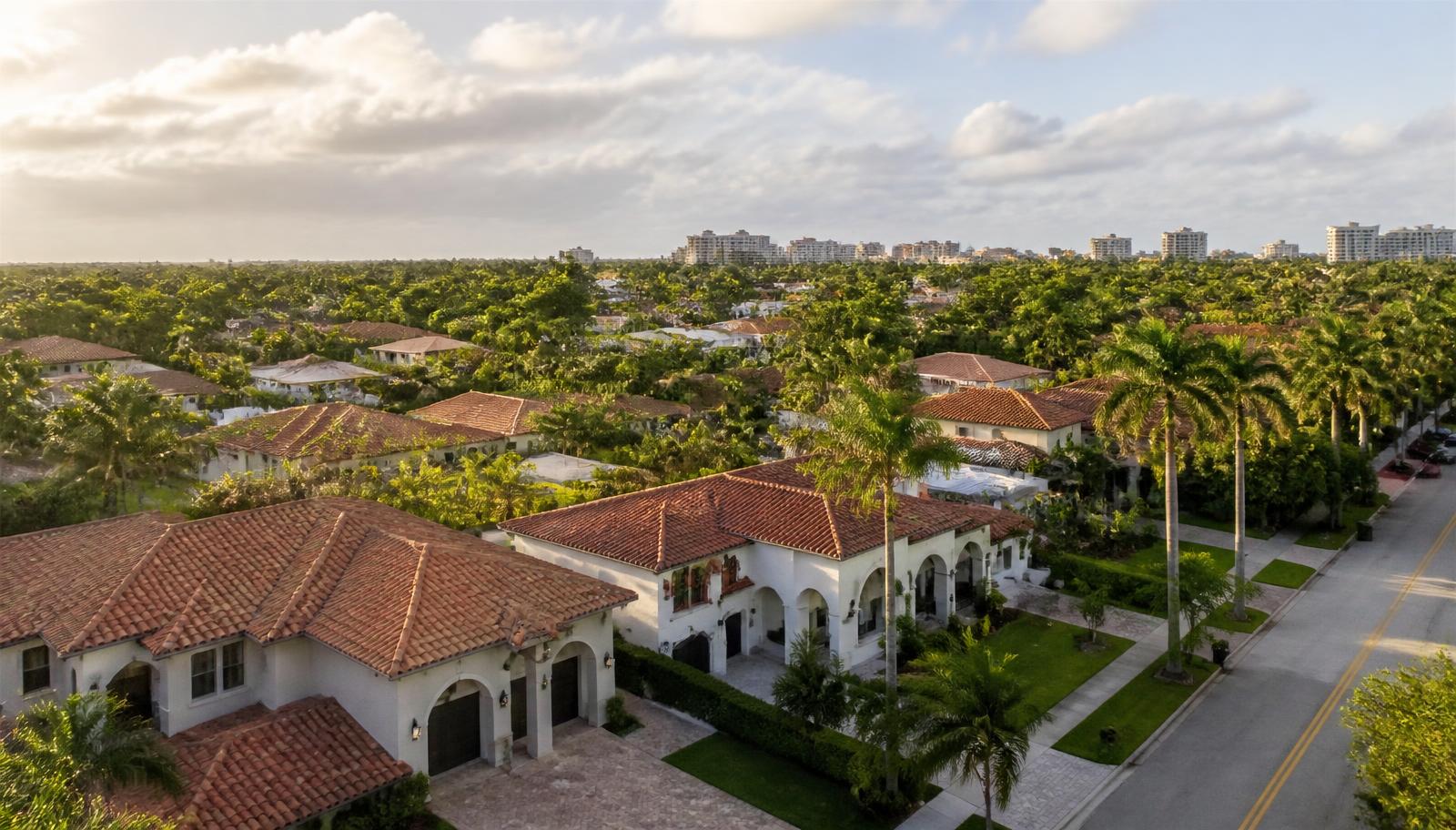
If you own a home in Florida, there's a good chance you've asked the same question as thousands of other homeowners: why is homeowners insurance in Florida so expensive?
The short answer is that Florida presents a combination of risks that makes insuring homes more difficult and costly than in many other parts of the country. Hurricanes, tropical storms, rising construction costs, reinsurance expenses, roof-related losses, litigation, fraud, property values, and geographic exposure all affect what insurance companies charge.
The situation is especially noticeable in South Florida, where homeowners in Miami-Dade, Broward, Palm Beach, and other coastal counties can face additional hurricane, wind, and flood exposure.
The good news is that Florida's insurance market has shown signs of improvement. State regulators reported that numerous insurance companies filed for rate decreases or no increases during 2024 and 2025, while additional insurers entered the Florida market. Still, Florida homeowners insurance remains a significant expense for many families. Understanding why it costs so much can help you make better decisions when shopping for coverage.
1. Florida Has Major Hurricane Exposure
The biggest reason Florida homeowners insurance is expensive is simple: hurricanes can cause enormous amounts of damage. Florida is surrounded by warm water on three sides and has thousands of miles of coastline, which creates substantial exposure to hurricanes and tropical storms.
A single major hurricane can damage hundreds of thousands of properties. Insurers may face claims involving:
- Roof damage
- Broken windows
- Structural damage
- Wind-driven rain
- Fallen trees
- Electrical damage
- Detached structures
- Personal property
- Temporary living expenses
Unlike a house fire that affects one property, a hurricane can affect an entire region at the same time. That concentration of risk makes Florida particularly challenging for property insurers.
Recent storms have reinforced that reality. Hurricanes Helene and Milton in 2024 provided another significant test of Florida's insurance system and its catastrophe-protection structure.
2. Insurance Companies Have to Prepare for Catastrophic Losses
Insurance works by collecting premiums from many policyholders and using those funds to pay claims. Most years, losses occur gradually. Hurricanes are different.
An insurer may go years without experiencing a devastating hurricane and then suddenly face billions of dollars in claims.
Because of that possibility, Florida insurers must maintain significant financial resources and purchase additional protection — which brings us to one of the biggest components of Florida homeowners insurance pricing.
3. Reinsurance Is Expensive
Insurance companies buy insurance too. It's called reinsurance, and it protects insurance companies from extraordinarily large losses, particularly catastrophic events such as hurricanes.
For example, imagine a Florida insurance company suffers $2 billion in losses after a major hurricane. The insurer may pay part of those losses itself while its reinsurers cover another portion according to their contracts.
Florida property insurers depend heavily on reinsurance because of the state's catastrophe exposure, and the cost of that protection ultimately affects consumer premiums. When global reinsurance prices increase, Florida homeowners may feel the effects even if they haven't personally filed a claim.
This is one reason insurance rates can increase after major hurricanes occurring elsewhere — not just at your particular home.
4. Florida Homes Are Expensive to Repair and Rebuild
Insurance doesn't simply consider what your house would sell for. Insurers also have to consider what it would cost to repair or rebuild the property following a covered loss, and construction expenses have increased significantly in recent years. Insurers must account for costs involving:
- Lumber
- Roofing materials
- Concrete
- Windows
- Electrical equipment
- Plumbing materials
- HVAC equipment
- Labor
- Permits
- Debris removal
After a hurricane, these costs can become even higher. Thousands of homes may require repairs simultaneously, creating shortages of contractors, materials, and equipment. That surge in demand can increase reconstruction expenses at exactly the same time insurance companies are processing enormous numbers of claims.
Higher replacement costs generally mean higher insurance exposure — and potentially higher premiums.
5. Your Roof Has a Major Impact on Florida Home Insurance
Few parts of a Florida home matter more to an insurance company than the roof, because it's one of the home's primary defenses against hurricane winds and heavy rain. Insurers may consider:
- Roof age
- Roof material
- Installation method
- Condition
- Wind resistance
- Remaining useful life
Older roofs may make coverage more difficult or expensive depending on the insurer. A roof nearing the end of its expected service life presents greater risk because it's more likely to experience damage during a storm.
That's why Florida homeowners sometimes encounter insurance issues even when their roof isn't leaking. From an insurer's perspective, the concern isn't necessarily whether the roof works today — it's how likely that roof is to survive the next major storm.
6. Wind Mitigation Features Can Affect Your Premium
Florida homeowners may be able to reduce insurance costs by improving the home's ability to withstand high winds. A wind mitigation inspection examines features that can make a home more resistant to hurricane damage, which may include:
- Roof-to-wall connections
- Roof shape
- Roof deck attachment
- Secondary water resistance
- Hurricane shutters
- Impact-resistant windows
- Reinforced garage doors
Depending on the home and insurer, qualifying wind mitigation discounts may reduce your premium. That's why two similar homes on the same street can sometimes have very different rates — one may have modern hurricane protection while the other does not.
Related reading: Florida homeowners insurance guide.
7. Your Location Matters
Where your home is located can significantly affect what you pay for insurance. Florida insurance companies evaluate geographic risk, including proximity to:
- Coastlines
- Large bodies of water
- Hurricane-prone regions
- Flood-prone areas
- Areas with higher historical claims
Homes in coastal communities may face higher wind exposure than homes farther inland, and South Florida has substantial hurricane exposure due to its geography. That's one reason homeowners insurance premiums can vary dramatically between different Florida cities — or even different ZIP codes.
8. Flooding Is a Separate Problem
Here's something that surprises many homeowners: standard homeowners insurance generally does not cover flood damage caused by rising water. That means Florida homeowners may need a separate Florida flood insurance policy in addition to their homeowners coverage.
Hurricanes can produce two completely different insurance losses: wind damage may fall under a homeowners or windstorm policy, while storm surge and rising water generally require flood insurance.
The Insurance Information Institute emphasizes that flood coverage is separate from standard property insurance and is available through the National Flood Insurance Program and private insurers.
So when Florida homeowners talk about the "cost of home insurance," they may actually be paying for several layers of property protection. Related reading: Florida flood insurance guide.
9. Hurricane Deductibles Can Be High
Your annual premium isn't the only expense that matters. Unlike many standard homeowners deductibles that use a fixed dollar amount, hurricane deductibles are often expressed as a percentage of insured value.
For example, imagine your home has $500,000 in dwelling coverage and a 2% hurricane deductible. Your hurricane deductible could be $10,000 — a major out-of-pocket expense after a storm.
Choosing different deductible options can affect insurance premiums, but homeowners should never select a deductible they couldn't realistically afford. Learn more about how insurance deductibles work.
10. Florida Historically Had Very High Insurance Litigation Costs
Another factor that contributed to Florida's insurance problems was claims-related litigation. Florida experienced unusually high levels of property insurance lawsuits, which added substantial legal costs to the insurance system — costs that ultimately affected insurers and policyholders.
Florida lawmakers passed significant insurance reforms beginning in 2022 intended to reduce excessive litigation and stabilize the market. More recent data suggests litigation has declined substantially: claims-related litigation filings dropped year over year from 2023 to 2024 and continued declining during the first half of 2025, according to industry analysis citing state data.
Florida's Office of Insurance Regulation has also identified the frequency and severity of litigated claims as one of the historical challenges facing the state's property insurance market. This doesn't mean litigation has disappeared, but reducing those costs may help improve the insurance market over time.
11. Insurance Fraud and Questionable Claims Have Also Added Costs
Insurance fraud doesn't only hurt insurance companies — it can eventually affect everyone paying premiums. Florida has faced issues involving questionable property claims and repair practices over the years. Examples have included disputes surrounding:
- Roof claims
- Assignment-of-benefits arrangements
- Contractor practices
- Inflated repair estimates
- Fraudulent claims
When insurance companies experience higher claim expenses, they must account for those costs when establishing future rates. Recent reforms have attempted to address some of these problems.
12. Several Florida Insurance Companies Failed or Left the Market
Florida's difficult insurance environment caused several carriers to become insolvent or stop writing new policies during the previous insurance crisis. When insurers leave the market, homeowners have fewer options, and reduced competition can make insurance more difficult and expensive to obtain.
It also pushed large numbers of homeowners toward Citizens Property Insurance Corporation, Florida's insurer of last resort.
Fortunately, this trend has recently begun moving in the opposite direction. The Florida Office of Insurance Regulation reported in August 2025 that 15 property insurers had entered the Florida market since legislative reforms began taking effect. More insurers competing for customers can potentially improve consumer choice.
13. Citizens Became Enormous — But Is Now Shrinking
Citizens Property Insurance Corporation plays an important role in Florida's property insurance system, providing coverage for qualifying property owners who have difficulty obtaining suitable coverage in the private market.
During Florida's insurance crisis, Citizens grew dramatically as private insurers reduced their exposure. Recently, that trend has reversed, and Citizens has been moving policies back into the private market through Florida's depopulation program.
In Southeast Florida alone, Citizens' policy count fell significantly during 2025, while private insurers took on more policies — another indication that Florida's insurance market may be becoming healthier.
14. Property Values and Coverage Limits Have Increased
Florida real estate values increased dramatically in many areas over the past several years. Although homeowners insurance isn't based solely on a property's market value, higher construction and replacement costs often accompany rising property values.
A house that required $250,000 to rebuild years ago may cost substantially more today. As dwelling coverage increases, the insurance company's potential exposure increases as well, and that can affect premiums.
Homeowners should still resist the temptation to intentionally underinsure their property simply to reduce costs. Insufficient coverage can create serious financial problems after a major loss — it's one of the insurance mistakes Florida residents make most often.
15. Older Florida Homes Can Be More Difficult to Insure
Florida has millions of older homes. Age itself doesn't necessarily make a property uninsurable, but older houses may contain systems that insurers evaluate carefully, such as:
- Older roofs
- Electrical systems
- Plumbing
- Water heaters
- HVAC equipment
- Outdated construction methods
Some insurers may request inspections such as a four-point inspection before offering coverage on an older home. A four-point inspection generally examines the roof, electrical, plumbing, and HVAC systems.
Updating older systems may improve both safety and insurance eligibility. If you're purchasing your first property, our guide to insurance for first-time home buyers in Florida covers what to check before closing.
16. Water Damage Is a Major Homeowners Insurance Risk
Not every expensive Florida property claim involves a hurricane. Water damage can also generate large losses. Potential sources include:
- Burst pipes
- Plumbing leaks
- Failed water heaters
- Appliance supply lines
- Roof leaks
- Drainage problems
Older plumbing systems may receive additional underwriting attention because water losses can become expensive quickly. Depending on the insurer, home age, plumbing type, and condition may affect coverage eligibility and pricing.
17. South Florida Can Be Especially Expensive
Homeowners in Miami-Dade, Broward, Palm Beach, and Monroe counties may encounter particularly challenging insurance conditions. South Florida combines several risk factors:
- Major hurricane exposure
- High property values
- Expensive construction
- Coastal development
- Dense population
- Older housing stock in some neighborhoods
- Flood exposure
This doesn't mean every South Florida homeowner pays the same premium. Two neighboring homes can have very different rates depending on roof age, construction type, hurricane protection, claims history, coverage limits, and insurance carrier. That's why comparison shopping can be especially valuable in Miami and South Florida.
Is Florida Home Insurance Finally Getting Cheaper?
There are encouraging signs. Florida's property insurance market appears to be stabilizing after several extremely difficult years.
The Florida Office of Insurance Regulation reported that dozens of homeowners insurance companies had filed either rate decreases or no increases since January 2024. OIR also reported that homeowners insurance costs declined slightly during the fourth quarter of 2024. Industry data showed significant improvement in insurers' financial performance during 2025, while litigation costs declined.
However, that doesn't mean every Florida homeowner will receive a lower renewal premium. Insurance pricing remains highly dependent on:
- Location
- Home age
- Roof condition
- Coverage limits
- Deductibles
- Claims history
- Construction type
- Wind mitigation
- Insurance carrier
The broader market may improve while an individual homeowner's rate still increases.
How Can Florida Homeowners Lower Insurance Costs?
You can't eliminate Florida's hurricane risk, but there are steps that may help reduce your premium.
Shop Multiple Insurance Carriers
Insurance companies don't price every property the same way. One insurer may be highly competitive for your home while another may charge substantially more. This is one of the biggest advantages of working with an independent insurance agency.
Get a Wind Mitigation Inspection
If your home has qualifying hurricane-resistant features, make sure your insurer knows about them. Potential wind mitigation discounts can sometimes be substantial.
Maintain or Upgrade Your Roof
A newer, stronger roof can improve both insurance eligibility and pricing. If you're replacing your roof, ask about hurricane-resistant construction techniques that may qualify for insurance credits.
Review Your Deductibles
Increasing your deductible may reduce your premium — but don't choose a deductible you couldn't comfortably afford following a loss.
Bundle Policies When Appropriate
Some insurance companies offer discounts when homeowners combine policies such as home insurance, auto insurance, and umbrella insurance. Bundling isn't always the cheapest option, so compare total costs before making a decision. Our guide to Florida umbrella insurance explains when that extra liability layer makes sense.
Review Your Coverage Annually
Insurance markets change. Your current carrier may have been the best option three years ago but may no longer be competitive. An annual insurance review gives you an opportunity to compare premium, coverage limits, deductibles, discounts, and carrier options. For more ideas, see our list of ways to lower insurance premiums.
Don't Reduce Coverage Just to Get a Lower Premium
When insurance becomes expensive, it's tempting to remove coverage until the premium looks affordable. Be careful — reducing insurance by thousands of dollars to save a relatively small amount annually can leave you financially exposed.
Instead, look at your entire policy. Ask your insurance agent:
- Are my coverage limits appropriate?
- Am I receiving available discounts?
- Is my wind mitigation report current?
- Are there other carriers available?
- Would changing deductibles help?
- Are there unnecessary endorsements?
- Am I missing important coverage?
The goal is not simply to find the cheapest homeowners insurance in Florida. It's to find appropriate coverage at a competitive price.
Why Work With an Independent Florida Insurance Agent?
Florida's homeowners insurance market is complicated. Carriers enter and leave markets, underwriting guidelines change, roof requirements differ, and rates change. Some companies may be competitive in one part of Florida but not another.
An independent insurance agent can compare options from multiple carriers rather than offering only one company's policy. That can help homeowners evaluate:
- Premiums
- Coverage limits
- Hurricane deductibles
- Windstorm protection
- Roof requirements
- Discounts
- Flood insurance
- Umbrella insurance
Instead of trying to navigate Florida's insurance market alone, you can have someone compare available options and explain the differences. Related reading: independent insurance agent vs. buying direct.
Frequently Asked Questions About Florida Home Insurance
Why is homeowners insurance so expensive in Florida?
Florida combines hurricane exposure, high reinsurance costs, expensive construction, severe weather risk, historical litigation costs, and other property-related risks. Together, these factors make Florida more expensive for insurers than many other states.
Will Florida homeowners insurance rates go down?
Some insurers have already filed rate decreases or no increases, and Florida regulators have reported signs of market stabilization. However, individual homeowners may still see different results depending on their property and insurer.
Why does my roof affect my homeowners insurance?
Your roof protects the home from wind and water damage. Older or weaker roofs can be more likely to suffer significant damage during hurricanes, making roof age and condition important underwriting factors.
Does homeowners insurance cover hurricanes in Florida?
Homeowners insurance may cover certain hurricane-related wind damage, subject to policy terms, exclusions, and deductibles. Flooding and storm surge caused by rising water generally require separate flood insurance.
Why do I need a separate flood insurance policy?
Standard homeowners insurance generally excludes flooding caused by rising water. Flood coverage can be purchased separately through the National Flood Insurance Program or private flood insurers.
Can a wind mitigation inspection lower my insurance premium?
Potentially. Qualifying hurricane-resistant features may make your home eligible for wind mitigation credits depending on the property and insurer.
Should I change insurance companies every year?
Not necessarily. But reviewing your coverage and comparing available options periodically can help determine whether your current carrier remains competitive.
Florida Home Insurance Is Expensive — but You Still Have Options
There's no single reason homeowners insurance costs more in Florida. It's the result of several risks working together: hurricanes, expensive reconstruction, reinsurance, roof exposure, severe weather, historical litigation costs, flooding, and the enormous financial risk created when millions of homes sit in the path of potentially catastrophic storms.
The encouraging news is that Florida's insurance market has begun showing signs of improvement. More insurers have entered the market, litigation has declined, and some carriers have filed rate reductions or stable rates. That makes shopping and reviewing your coverage more important than ever.
At Tammy Insurance, we help Florida homeowners compare insurance options from multiple carriers, understand their coverage, review deductibles, and identify potential discounts and coverage gaps.
Whether you're buying a home, facing a difficult renewal, replacing your roof, or simply wondering whether you're paying too much, we're here to help. Contact Tammy Insurance or request a quote for a personalized Florida homeowners insurance review.