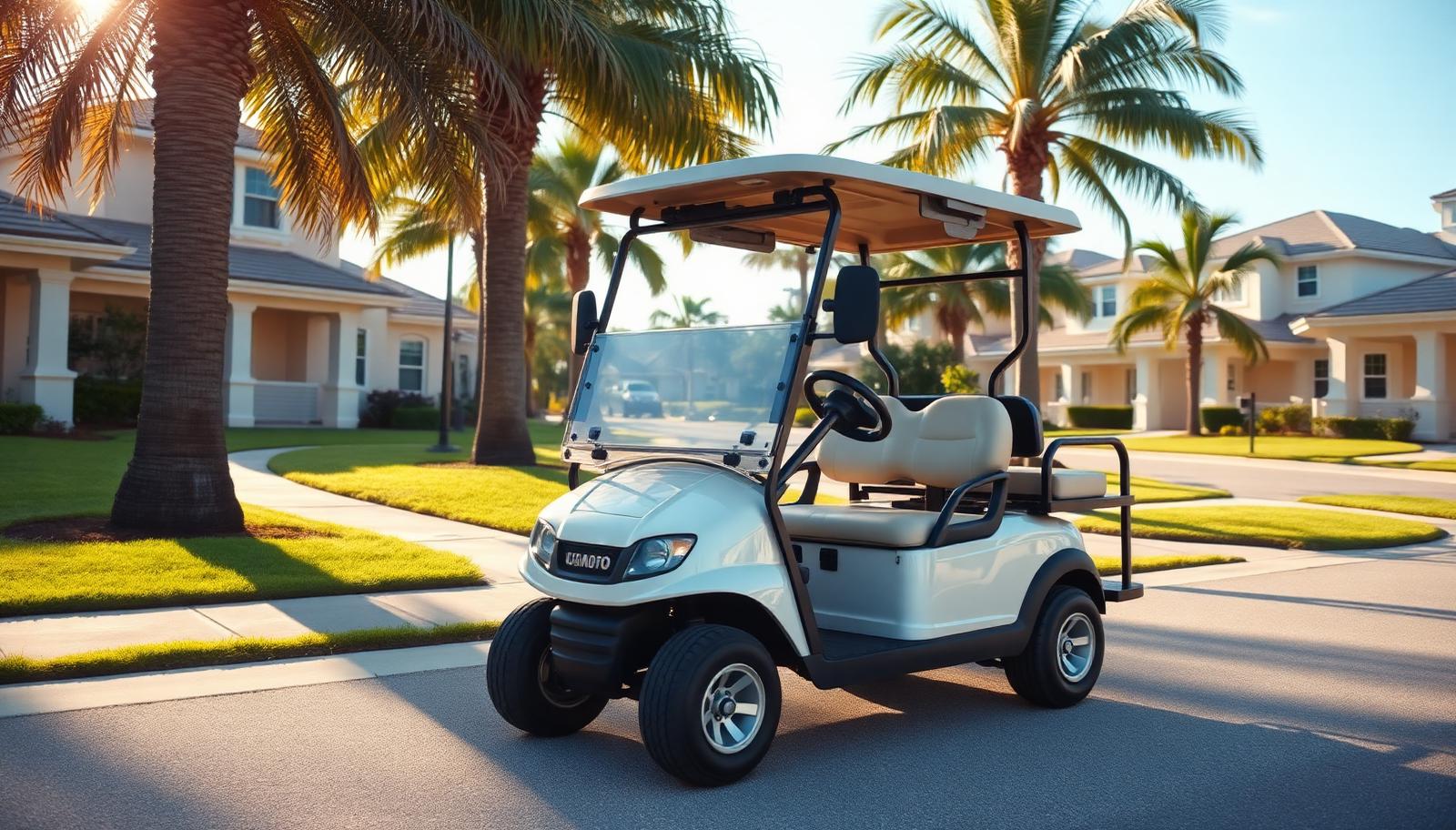
Golf carts are no longer limited to golf courses. Across Florida, people use them in retirement communities, gated neighborhoods, beach towns, campgrounds, resorts, and master-planned communities. Some owners use them for short local trips, while others modify them for operation on certain public roads.
That creates an important question: do you need golf cart insurance in Florida? The answer depends partly on what you actually own. Florida law distinguishes between a golf cart and a low-speed vehicle, commonly called an LSV. That distinction affects where the vehicle can legally operate, whether it must be titled and registered, and whether Florida auto insurance requirements apply.
Florida defines a low-speed vehicle as a four-wheeled vehicle with a top speed greater than 20 mph but no more than 25 mph. Low-speed vehicles must be titled, registered, and insured with Personal Injury Protection and Property Damage Liability coverage. A traditional golf cart may be treated differently. You can also review our golf cart, ATV and RV insurance page for coverage options.
Is Golf Cart Insurance Required in Florida?
For a traditional golf cart, Florida does not generally impose the same statewide title, registration, and auto insurance requirements that apply to a low-speed vehicle. That's different from the rules covered in our guide to Florida auto insurance requirements.
However, that does not mean every golf cart owner can operate anywhere without insurance. Florida law limits where golf carts can be operated on public roads, and counties and municipalities can designate certain roads for golf-cart use. Local rules may also affect how and where golf carts can be driven.
In addition, your homeowners association, gated community, golf course, resort, landlord, or lender may impose its own insurance requirements.
Even when insurance isn't legally required, a golf cart can still cause a serious injury or expensive property damage. That makes voluntary golf cart insurance worth considering.
Golf Cart vs. Low-Speed Vehicle in Florida
This distinction is extremely important. People often use the terms golf cart and LSV interchangeably, but Florida law does not treat them as the same thing.
Traditional Golf Cart
A golf cart is generally designed and manufactured for operation at lower speeds. Depending on where you live, local laws may allow golf carts on designated roads. Traditional golf carts are not automatically subject to the same insurance and registration requirements as street-legal low-speed vehicles.
Low-Speed Vehicle
Florida defines a low-speed vehicle as a four-wheeled vehicle capable of speeds greater than 20 mph but no more than 25 mph. An LSV must be:
- Titled
- Registered
- Insured
- Equipped with required safety equipment
Florida law also requires LSV operators to hold a valid driver's license. FLHSMV states that low-speed vehicles must carry Personal Injury Protection (PIP) and Property Damage Liability (PDL) insurance.
If you've modified a golf cart so that it qualifies as an LSV, its legal and insurance status may change.
Can You Convert a Golf Cart Into a Street-Legal LSV?
Potentially, but simply adding lights and seat belts doesn't automatically make a golf cart street legal. Florida has specific requirements for low-speed vehicles. Required equipment generally includes:
- Headlamps
- Stop lamps
- Turn signals
- Taillamps
- Reflectors
- Parking brake
- Rearview mirrors
- Windshield
- Seat belts
- Vehicle identification number
LSVs also must meet title, registration, and insurance requirements. Florida regulates the process of converting golf carts into LSVs, including related manufacturer requirements. Verify the conversion is legal and that the vehicle can properly be titled and insured before you modify it for road use.
Getting this wrong can leave you operating an unregistered, uninsured motor vehicle on a public road.
Where Can Low-Speed Vehicles Be Driven?
Florida generally permits low-speed vehicles on roads where the posted speed limit is 35 mph or less. An LSV may cross a higher-speed roadway at an intersection, subject to applicable traffic laws.
This does not mean an LSV can travel wherever a regular passenger car can. For example, an LSV cannot simply be used as a replacement for an ordinary car on high-speed expressways.
Why Consider Golf Cart Insurance Even When It Isn't Required?
A golf cart may look harmless compared with a car, but accidents can still cause significant injuries. Golf carts can:
- Hit pedestrians
- Collide with vehicles
- Damage parked cars
- Overturn
- Injure passengers
- Damage buildings or fences
- Be stolen
- Be damaged by storms
Without appropriate insurance, you could be personally responsible for those costs. Imagine accidentally hitting a pedestrian while driving through your neighborhood — medical expenses and liability claims could easily cost more than the golf cart itself. The value of the cart is only one part of the risk.
What Does Golf Cart Insurance Cover?
Golf cart insurance varies depending on the insurer and how the vehicle is classified and used. Coverage may include several of the following protections.
1. Liability Coverage
Liability insurance helps protect you if you're legally responsible for injuring someone or damaging someone else's property. Covered claims may involve:
- Medical expenses
- Property repairs
- Legal defense
- Settlements
- Court judgments
These are subject to the policy limits and terms. Liability coverage may be one of the most important protections you purchase, because a serious injury claim can cost far more than replacing the golf cart.
2. Property Damage Liability
Property Damage Liability can help pay for covered damage you cause to another person's property. That could include:
- Another golf cart
- A parked vehicle
- A fence
- A garage door
- A building
- Landscaping or other property
If you're operating an LSV, Florida's mandatory PDL requirement applies as part of its registration and insurance framework.
3. Personal Injury Protection for Low-Speed Vehicles
Because Florida treats LSVs as registered motor vehicles, they must carry PIP insurance as required by state law. PIP can provide certain benefits following a qualifying accident regardless of fault, subject to Florida law and policy terms.
A traditional golf cart may fall under a different insurance structure. That's another reason it's important to identify exactly how your vehicle is legally classified.
4. Collision Coverage
Collision coverage can help repair or replace your insured golf cart or LSV after a covered accident. Examples may include:
- Hitting another vehicle
- Hitting another golf cart
- Striking a curb
- Hitting a wall
- Certain rollover accidents
Collision coverage normally includes a deductible — see our explainer on how insurance deductibles work. If your golf cart is valuable or heavily customized, this coverage may be worth considering even if you own the vehicle outright.
5. Comprehensive Coverage
Comprehensive insurance may protect against certain non-collision losses. Depending on the policy, these can include:
- Theft
- Vandalism
- Fire
- Falling objects
- Certain storm damage
- Other covered losses
Florida golf cart owners should pay attention to comprehensive coverage because of the state's weather and theft exposure.
Does Golf Cart Insurance Cover Hurricanes?
Depending on the policy, comprehensive coverage may protect against certain hurricane-related damage. Possible examples include:
- A tree falling onto the golf cart
- Wind-blown debris damaging the vehicle
- Damage caused by certain covered storm events
- Certain flood-related physical damage, depending on the contract
Coverage varies. If your cart is stored outdoors or in a carport, severe weather protection may be particularly valuable. Remember that a liability-only policy generally isn't designed to repair your own vehicle after storm damage.
What About Flood Damage?
Florida golf carts can be exposed to flooding just like cars. Heavy rain, tropical storms, storm surge, and overwhelmed drainage systems can flood garages, streets, storage areas, and neighborhood parking areas.
Whether flood-related damage to your golf cart is insured depends on the type of policy and applicable comprehensive coverage. This is separate from Florida flood insurance covering a home or building.
6. Theft Coverage
Golf carts can be attractive targets for theft. They're smaller than cars and can sometimes be transported relatively easily. Comprehensive coverage may help protect against covered theft losses. Owners can also reduce risk by using:
- Steering locks
- Wheel locks
- GPS tracking
- Secure garages
- Chains
- Alarm systems
Ask whether qualifying anti-theft devices affect your insurance options or premium.
7. Uninsured and Underinsured Motorist Coverage
Depending on how your golf cart or LSV is insured, uninsured or underinsured motorist coverage may be available. This type of coverage can help in certain situations when another driver causes an accident but has no applicable liability insurance or insufficient applicable insurance.
This becomes especially important when golf carts or LSVs share roads with larger motor vehicles.
8. Medical Payments Coverage
Depending on the policy and vehicle classification, medical payments coverage may be available to help with certain medical expenses following a covered accident.
This should not be confused with Florida's required PIP for qualifying low-speed vehicles. Ask your insurance agent what medical-related protections are available for your specific cart.
Does Homeowners Insurance Cover a Golf Cart?
Possibly, but don't automatically assume that it provides everything you need. Some homeowners policies may provide limited protection for certain golf carts under specific circumstances. Coverage can depend heavily on:
- Where the cart is operated
- How it's used
- Vehicle classification
- Policy definitions
- Liability provisions
A golf cart used only on your own property may be treated differently from one regularly driven through your neighborhood or on public roads. If you use your cart away from your residence, discuss that specifically with your insurer — and review our Florida homeowners insurance guide.
Golf Cart Insurance for Gated Communities
Golf carts are particularly popular in Florida's gated neighborhoods, retirement communities, resort communities, and golf communities. Even when roads are privately owned, community rules may establish their own:
- Insurance requirements
- Driver-age restrictions
- Safety requirements
- Registration rules
- Operating areas
Your HOA may require liability coverage regardless of what state law requires. Always review your community rules before assuming insurance is optional.
Golf Cart Insurance in The Villages and Similar Communities
Large golf-cart-oriented communities create a unique transportation environment. Residents may use carts for shopping, restaurants, recreation, visiting neighbors, golf, and community events.
When a golf cart becomes part of your everyday transportation rather than an occasional recreational vehicle, your liability exposure naturally increases. More miles driven and more interaction with pedestrians, other carts, cyclists, and cars creates more opportunities for accidents.
That's a good reason to review your coverage carefully.
Golf Cart Insurance in Miami and South Florida
Golf carts are also becoming increasingly common throughout South Florida. Owners may use them in residential communities, resorts, golf courses, coastal neighborhoods, and private developments. South Florida creates its own risks, including:
- Dense traffic
- High-value vehicles
- Heavy rainfall
- Hurricane exposure
- Flooding
- Theft
If your golf cart will be operating anywhere near ordinary street traffic, make sure you understand both local traffic laws and your insurance coverage.
Insurance for Custom and Modified Golf Carts
Florida owners love customizing golf carts. Common upgrades include:
- Lift kits
- Larger wheels and tires
- Custom seats
- Stereo systems
- LED lighting
- Lithium batteries
- Custom paint
- Enclosures
- Performance upgrades
Those modifications can dramatically increase the vehicle's value. A cart purchased for $8,000 might contain thousands of dollars of upgrades later. Don't assume every modification is automatically included in your insurance settlement. Ask whether your policy covers custom parts, accessories, aftermarket equipment, and increased vehicle value.
Keep receipts and photographs of major upgrades.
What About Golf Cart Batteries?
Modern electric golf carts can use expensive battery systems, and lithium conversions in particular can represent a significant investment. Insurance may cover battery damage when it results from certain covered losses, but ordinary:
- Battery degradation
- Wear
- Maintenance
- Mechanical or electrical failure
shouldn't automatically be assumed to be covered. Insurance is primarily designed for covered accidental losses rather than routine maintenance.
How Much Does Golf Cart Insurance Cost in Florida?
There isn't one standard statewide price. Insurance companies may consider factors such as:
- Golf cart value
- Whether it is an LSV
- Where it is used
- Driver ages
- Driving history
- Coverage limits
- Deductibles
- Modifications
- Claims history
- Garaging location
- Annual usage
- Available discounts
A basic recreational golf cart used occasionally within a private community presents a different risk from a fully equipped LSV driven on public streets every day. Personalized quotes will give you a much better idea of your actual cost than generic online averages.
How to Lower Golf Cart Insurance Costs
Compare Multiple Insurance Companies
Different carriers may have different eligibility requirements and prices. An independent insurance agency can help compare available options.
Keep Drivers' Records Clean
Driving history can matter, particularly when a vehicle is licensed and operated on public roads. Safe driving can reduce both accidents and insurance problems.
Choose Deductibles Carefully
A higher deductible may reduce your premium, but it also increases your out-of-pocket expense following a covered loss. Choose an amount you could comfortably afford.
Secure the Cart
Using a locked garage, tracking device, alarm, or wheel lock may help reduce theft exposure. Some insurers may recognize qualifying security devices.
Ask About Bundling
Depending on the insurance company, you may be able to combine golf cart coverage with homeowners insurance, auto insurance, umbrella insurance, or other recreational vehicle coverage. Compare the total package rather than assuming bundling automatically means a lower price. For more ideas, see our list of ways to lower insurance premiums.
Should You Buy the Cheapest Golf Cart Insurance?
Not automatically. Instead, compare:
- Liability limits
- Physical damage coverage
- Deductibles
- Medical-related coverage
- Uninsured motorist options
- Custom equipment coverage
- Geographic restrictions
- Vehicle-use restrictions
A cheap policy isn't a good value if it excludes the way you actually use your cart.
Can Golf Cart Liability Be Covered by Umbrella Insurance?
Potentially. A personal umbrella policy provides additional liability protection above qualifying underlying insurance policies. If you regularly operate a golf cart or LSV, disclose it to your umbrella insurer. Don't assume the umbrella automatically covers every recreational vehicle.
Owners with homes, investments, savings, rental properties, or significant income may want to consider higher liability protection — see our guide to Florida umbrella insurance.
Common Golf Cart Insurance Mistakes in Florida
- Confusing a golf cart with a low-speed vehicle
- Assuming insurance is never required
- Driving on public roads without understanding local laws
- Modifying a golf cart into an LSV without properly titling and insuring it
- Assuming homeowners insurance provides complete protection
- Carrying inadequate liability limits
- Forgetting about theft coverage
- Failing to insure expensive modifications
- Choosing a deductible you can't afford
- Ignoring HOA insurance requirements
- Not checking driver-age rules
- Assuming a street-legal cart can travel on any Florida roadway
- Buying coverage based only on price
For a broader look, see our roundup of insurance mistakes Florida residents make.
Review Coverage When Your Golf Cart Use Changes
Your insurance needs may change if you:
- Modify the cart
- Increase its top speed
- Convert it into an LSV
- Begin driving on public roads
- Move to another community
- Add younger drivers
- Add expensive accessories
- Start using it more frequently
Don't assume the policy you bought for a stock recreational golf cart is still appropriate after significant modifications. Tell your insurance agent when your vehicle or its use changes — and know what happens after an insurance claim in Florida before you ever need to file one.
Why Work With an Independent Florida Insurance Agent?
Golf cart insurance is a good example of why insurance isn't always straightforward. The first question isn't simply "how much is golf cart insurance?" It's "what exactly is this vehicle, and how am I using it?"
An independent insurance agent can help determine whether you're insuring a recreational golf cart, a modified golf cart, or a street-legal low-speed vehicle, and compare appropriate coverage from available carriers. They can also help review liability limits, collision coverage, comprehensive coverage, deductibles, custom equipment, homeowners policy interaction, and umbrella protection.
See our comparison of using an independent insurance agent versus buying direct.
Frequently Asked Questions About Golf Cart Insurance in Florida
Is golf cart insurance required in Florida?
A traditional golf cart isn't automatically subject to the same statewide insurance requirements as a low-speed vehicle. However, local governments, HOAs, lenders, or other entities may impose requirements depending on where and how the cart is operated.
Does a low-speed vehicle need insurance in Florida?
Yes. Florida requires low-speed vehicles to be titled, registered, and insured with Personal Injury Protection and Property Damage Liability coverage.
What is the difference between a golf cart and an LSV?
Florida defines an LSV as a four-wheeled vehicle whose top speed is greater than 20 mph but no more than 25 mph. LSVs are subject to registration, title, safety-equipment, driver's-license, and insurance requirements.
Can I drive an LSV on any road in Florida?
No. Florida generally restricts LSV operation to roads with posted speed limits of 35 mph or less, although an LSV may cross higher-speed roads at intersections under applicable rules.
Does homeowners insurance cover my golf cart?
It may provide limited coverage in certain situations, but coverage varies significantly by policy and how the golf cart is used. Ask your insurer specifically about off-premises and roadway use.
Does golf cart insurance cover theft?
Comprehensive coverage may protect against covered theft, subject to policy limits and deductibles.
Can golf cart insurance cover hurricane damage?
Applicable comprehensive coverage may protect against certain covered storm losses, depending on the policy.
Does insurance cover a modified golf cart?
Potentially, but you should disclose modifications to your insurer. If modifications change the vehicle's legal classification into an LSV, additional registration and insurance requirements may apply.
How much does golf cart insurance cost in Florida?
Pricing varies based on vehicle value, classification, drivers, location, use, coverage limits, deductibles, and insurance carrier.
Can I add my golf cart to an umbrella policy?
Possibly, but umbrella policies have specific underlying-coverage requirements and exclusions. Tell your insurer about the golf cart or LSV and verify whether it qualifies.
Protect Your Golf Cart — and More Importantly, Yourself
Golf carts are one of the easiest and most enjoyable ways to get around many Florida communities. But once a golf cart leaves the golf course and starts sharing roads, neighborhoods, and public spaces with pedestrians and vehicles, insurance becomes much more important.
The biggest thing Florida owners need to understand is the difference between a traditional golf cart and a low-speed vehicle. Florida requires LSVs to be titled, registered, and insured with PIP and Property Damage Liability coverage, while traditional golf carts operate under a different set of rules. Regardless of whether insurance is legally required, an accident can still create substantial financial exposure.
At Tammy Insurance, we help Florida golf cart and recreational vehicle owners understand their coverage options, determine what type of vehicle they're insuring, compare available insurance carriers, and choose protection based on how the vehicle is actually used. Looking for golf cart insurance in Florida? Contact Tammy Insurance or request a quote today.