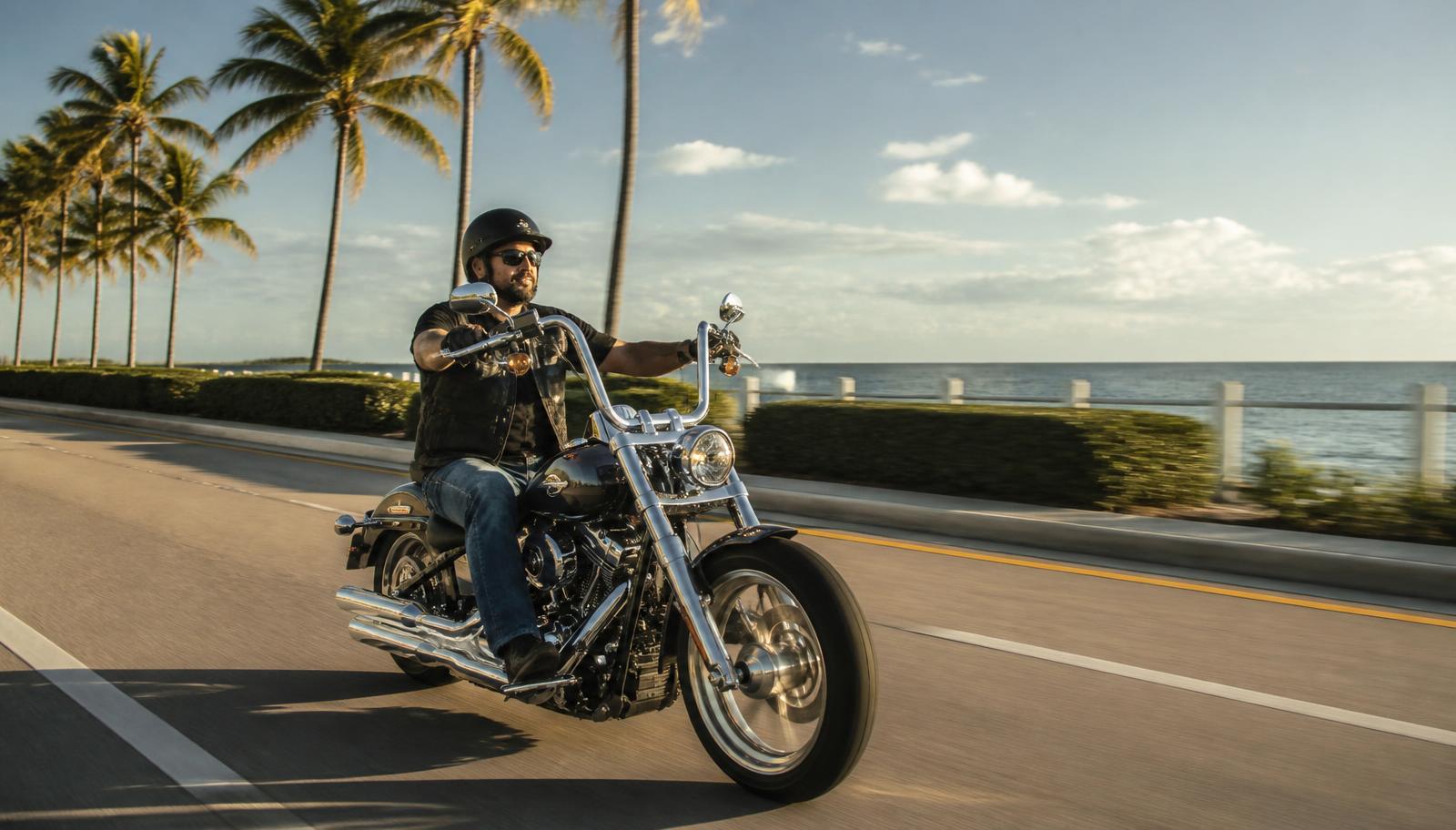
Florida is practically made for motorcycles. Warm weather, scenic coastal roads, year-round riding, and thousands of miles of highways make motorcycles a popular way to get around. But riding also creates risks that are very different from driving a car.
That makes understanding motorcycle insurance in Florida especially important. Florida's rules can be confusing because motorcycles aren't treated exactly like ordinary passenger vehicles. Proof of the standard PIP and property damage coverage required for many four-wheel vehicles generally isn't required simply to register a motorcycle. However, Florida's Financial Responsibility Law can create insurance requirements after certain crashes, and riders may still face substantial personal financial exposure if they cause an accident without adequate coverage.
In other words: just because you may be able to register and ride a motorcycle without purchasing the same insurance package required for a car doesn't mean riding uninsured is a good financial decision.
Is Motorcycle Insurance Required in Florida?
This is one of the most frequently searched questions about Florida motorcycle insurance.
Florida does not generally require proof of insurance simply to register a motorcycle in the same way it requires insurance verification for many four-wheel vehicles. Florida's motor vehicle registration procedures specifically note that proof of insurance isn't required to be submitted for motorcycles and other qualifying vehicles with fewer than four wheels.
That sometimes gets simplified online into: "Florida doesn't require motorcycle insurance." But that statement doesn't tell the whole story.
Florida's Financial Responsibility Law can apply when a motorcycle operator is involved in certain crashes. FLHSMV states that when a motorcycle is involved in a crash involving injury, an at-fault operator is responsible for having the required financial responsibility coverage.
A serious motorcycle crash can create significant financial liability for:
- Bodily injuries
- Vehicle damage
- Medical expenses
- Lost wages
- Legal costs
- Property damage
- Court judgments
So even when coverage isn't required before you initially register the motorcycle, carrying adequate insurance can provide important financial protection.
Florida Motorcycle Insurance vs. Florida Auto Insurance
Motorcycle and car insurance share many of the same types of coverage, but Florida handles them differently. For most qualifying four-wheel vehicles with a current Florida registration, the state requires at least:
- $10,000 in Personal Injury Protection (PIP)
- $10,000 in Property Damage Liability (PDL)
Motorcycles are treated differently under Florida's insurance framework. That means riders shouldn't assume the coverage structure from their auto policy automatically applies to their motorcycle.
It's better to treat motorcycle insurance as its own policy and evaluate the coverage based on the risks associated with riding. For the four-wheel side, see our guide to Florida auto insurance requirements.
What Does Motorcycle Insurance Cover in Florida?
A motorcycle insurance policy can contain several different coverages. Exactly what's included depends on the insurer and policy you select.
Bodily Injury Liability
Bodily Injury Liability can help protect you when you're legally responsible for injuries suffered by someone else in an accident. Covered expenses can potentially include:
- Medical expenses
- Lost income
- Legal defense costs
- Settlements
- Court judgments
These are subject to your policy limits and terms. This coverage becomes especially important when you consider how expensive a serious injury claim can become. Even a rider who doesn't own substantial assets should consider the consequences of becoming personally responsible for a large liability claim.
Property Damage Liability
Property Damage Liability can help pay for covered damage you cause to someone else's property. That could include:
- Another motorcycle
- A car
- A truck
- A fence
- A building
- Roadside property
Motorcycles may be smaller than cars, but they can still cause significant property damage in an accident. Adequate liability insurance protects more than the bike — it helps protect your finances.
Collision Coverage
Liability insurance protects against claims from other people. It generally doesn't pay to repair your own motorcycle after an at-fault crash. That's where collision coverage comes in.
Collision coverage may help repair or replace your motorcycle after a covered collision involving:
- Another vehicle
- A guardrail
- A wall
- A curb
- Another object
- Certain single-vehicle accidents
You'll normally choose a deductible. For example, if covered repairs cost $6,000 and you have a $500 collision deductible, you would generally be responsible for the $500 deductible while the insurer addresses the remaining covered amount, subject to policy limits and terms. Our guide to how insurance deductibles work explains this in more detail.
Comprehensive Motorcycle Insurance
Comprehensive coverage protects your bike against many losses that aren't caused by a collision. Depending on the policy, that may include:
- Theft
- Vandalism
- Fire
- Falling objects
- Storm damage
- Certain flood-related losses
- Animal strikes
Comprehensive coverage can be particularly important for Florida motorcycles because riders face risks that go well beyond traffic accidents.
Motorcycle Theft Coverage in Florida
Motorcycles can be easier to steal than cars because they're smaller, lighter, and can sometimes be transported without being driven. A liability-only motorcycle policy generally won't replace your motorcycle if someone steals it.
Comprehensive coverage is typically the part of a motorcycle policy designed to address covered theft losses. Owners of valuable motorcycles may also want to consider additional security measures such as:
- Locked garages
- Disc locks
- Chains
- Tracking systems
- Alarm systems
Some insurers may offer discounts or underwriting benefits for qualifying anti-theft devices.
Does Motorcycle Insurance Cover Hurricanes and Flooding?
Florida riders also need to think about severe weather. Depending on the policy, comprehensive motorcycle coverage may protect against certain covered losses involving:
- Hurricane winds
- Falling tree limbs
- Wind-blown debris
- Floodwater
- Hail
- Other weather-related damage
Imagine leaving your motorcycle outside when a tropical storm sends a tree limb crashing onto the bike, or a parking garage floods during extreme rainfall. Liability insurance isn't designed to repair your motorcycle in these situations — comprehensive coverage may be, subject to exclusions and deductibles.
Uninsured and Underinsured Motorist Coverage
One coverage Florida motorcycle riders should seriously discuss with their insurance agent is uninsured and underinsured motorist coverage. This coverage can help protect you in certain situations when a driver who causes an accident:
- Has no applicable liability insurance
- Doesn't have enough applicable insurance to cover the loss
Motorcyclists have far less physical protection than occupants inside passenger vehicles. If a rider suffers a serious injury after being hit by an inadequately insured driver, the financial consequences can be substantial.
Don't evaluate your motorcycle policy only by asking, "How much coverage do I need if I hit someone?" Also ask, "What protects me if someone hits me?"
Medical Payments Coverage
Depending on the motorcycle insurer and available coverage, riders may be able to purchase medical payments protection. Medical payments coverage can potentially help pay certain medical expenses associated with a covered motorcycle accident, subject to policy limits.
Because Florida's standard automobile PIP framework doesn't apply to motorcycles in the same way it does to qualifying four-wheel vehicles, riders should carefully review what medical coverage their motorcycle policy provides.
Florida Motorcycle Helmet Law and Insurance
Florida's helmet law has an important insurance component. Under Florida law, motorcycle operators and passengers generally must wear approved protective headgear. However, a person over 21 years old may ride without protective headgear if that person is covered by an insurance policy providing at least $10,000 in medical benefits for injuries resulting from a motorcycle crash.
It's important to understand what this means. The $10,000 medical coverage requirement associated with riding without a helmet is not the same thing as comprehensive motorcycle liability protection. A rider could satisfy that particular helmet-law requirement and still have inadequate protection against:
- Liability claims
- Damage to the motorcycle
- Theft
- Uninsured motorists
- Significant medical expenses
Don't confuse complying with the helmet-law insurance provision with having a complete motorcycle insurance policy.
Do You Need Insurance on a Financed Motorcycle?
Even when Florida doesn't require proof of motorcycle insurance at registration, your lender may. If you're financing your bike, the lender has a financial interest in the motorcycle. Financing agreements commonly require physical damage protection such as collision coverage and comprehensive coverage until the loan is repaid.
The lender may also place restrictions on your deductible. Always review the financing agreement before changing or removing coverage.
What About Leased Motorcycles?
If you lease a motorcycle, the leasing company may impose insurance requirements beyond what Florida law requires. These may include specified:
- Liability limits
- Comprehensive coverage
- Collision coverage
- Deductibles
The exact requirements depend on the leasing company and contract.
Motorcycle Insurance for Custom Bikes
Florida has a strong custom motorcycle culture. That creates another insurance consideration. A basic policy may not automatically provide enough coverage for expensive modifications such as:
- Custom paint
- Aftermarket exhaust systems
- Wheels
- Suspension upgrades
- Seats
- Saddlebags
- Audio systems
- Performance modifications
- Chrome accessories
If you've invested thousands of dollars into customizing your motorcycle, make sure your insurer knows. Ask how your policy handles custom parts, accessories, aftermarket equipment, and vehicle valuation.
Don't assume every modification will automatically be reimbursed following a total loss.
Sport Bikes, Cruisers, Touring Bikes, and Scooters
Sport Bikes
Insurance companies consider the type of motorcycle when determining premiums. A high-performance sport bike can present a different risk profile from a small-displacement commuter motorcycle. Factors may include:
- Engine displacement
- Horsepower
- Vehicle value
- Repair costs
- Theft exposure
- Rider experience
That doesn't automatically mean every sport bike is extremely expensive to insure. The rider and insurer matter too, and shopping multiple carriers can make a significant difference.
Cruisers and Touring Bikes
Large touring motorcycles can be expensive vehicles equipped with luggage systems, navigation, audio equipment, fairings, electronics, and expensive accessories. Owners should pay attention to physical damage limits and accessory coverage. Riders who travel long distances may also want to consider roadside assistance and trip-related options offered by their carrier.
Scooters and Smaller Bikes
Smaller motorcycles and scooters still create liability exposure. Don't assume that because your bike is inexpensive you have nothing worth insuring. The value of the motorcycle itself might be modest, but an accident can still cause injury, property damage, and legal liability.
Liability exposure can easily exceed the value of the bike.
How Much Does Motorcycle Insurance Cost in Florida?
There is no single standard price for motorcycle insurance in Florida. Insurance companies may evaluate factors such as:
- Rider age
- Driving record
- Motorcycle type
- Engine size
- Motorcycle value
- Location
- Riding experience
- Claims history
- Annual mileage
- Coverage limits
- Deductibles
- Anti-theft equipment
- Safety training
- Number of motorcycles insured
A 45-year-old experienced rider with a clean record on a modest cruiser may receive a very different premium from a 21-year-old rider insuring a new high-performance sport bike.
That's why statewide "average motorcycle insurance cost" numbers aren't particularly useful when you're trying to determine what your policy will cost. Getting personalized quotes is better.
Motorcycle Insurance in Miami and South Florida
South Florida riders face additional considerations. Miami-Dade, Broward, and Palm Beach counties have:
- Dense traffic
- Busy expressways
- Year-round riding
- High vehicle values
- Heavy tourism
- Severe thunderstorms
- Hurricane exposure
- Localized flooding
A rider regularly commuting through Miami traffic faces different risks from someone who occasionally rides rural roads on weekends. Your policy should reflect how and where you actually use the motorcycle. Riders who also drive can compare notes in our guide to the best car insurance for Miami drivers.
How to Lower Motorcycle Insurance Costs
There are several ways riders may be able to control premiums without simply eliminating important coverage.
Compare Multiple Insurance Companies
Different insurers may price the same rider very differently. That's one reason working with an independent insurance agent can be useful.
Maintain a Clean Driving Record
Traffic violations and accidents can increase insurance costs. Safe riding benefits both your physical safety and your insurance history. Many of the same habits appear in our list of 15 ways Florida drivers can lower insurance costs.
Take an Approved Motorcycle Safety Course
Depending on the insurer, completing qualifying rider training may help with pricing or eligibility. Even when it doesn't reduce your premium, additional training can help improve riding skills and accident avoidance.
Choose Your Motorcycle Carefully
Motorcycle type affects insurance cost. Before purchasing a bike, consider getting an insurance quote on the exact model you're considering. Two motorcycles with similar purchase prices can sometimes have very different insurance premiums.
Increase Your Deductible Carefully
Choosing a higher comprehensive or collision deductible may reduce your premium. But don't choose a $2,000 deductible simply to save money if you couldn't comfortably pay $2,000 after an accident.
Ask About Multi-Policy Discounts
Some insurers may offer savings when motorcycle insurance is combined with other coverage such as auto insurance, homeowners insurance, or renters insurance.
Compare the total package instead of assuming bundling is automatically cheaper.
Should You Buy the Cheapest Motorcycle Insurance?
Price matters. But it shouldn't be the only thing you compare. Two motorcycle policies that cost nearly the same can provide very different protection. Compare:
- Bodily injury liability limits
- Property damage limits
- Uninsured motorist coverage
- Comprehensive coverage
- Collision coverage
- Deductibles
- Accessory coverage
- Medical-related coverage
- Roadside assistance
A cheap policy that leaves major gaps isn't necessarily a good deal. And if you ever do file a claim, it helps to know what happens after an insurance claim in Florida.
Common Florida Motorcycle Insurance Mistakes
Riders should avoid several common mistakes:
- Assuming no insurance requirement means no financial risk
- Carrying inadequate liability limits
- Ignoring uninsured motorist protection
- Forgetting about theft coverage
- Assuming modifications are automatically covered
- Choosing a deductible they can't afford
- Removing comprehensive coverage from a valuable paid-off motorcycle
- Forgetting to update the insurer after modifying the bike
- Shopping based only on price
- Confusing Florida's helmet-law medical benefit requirement with complete motorcycle insurance
For a broader look, see our roundup of insurance mistakes Florida residents make.
Should Motorcycle Riders Consider Umbrella Insurance?
Potentially. A personal umbrella policy provides additional liability protection over qualifying underlying insurance policies. Riders with substantial home equity, savings, investments, income, or other assets may want to discuss whether their motorcycle liability limits can be coordinated with umbrella coverage.
Not every umbrella insurer treats motorcycles the same way, so make sure the motorcycle is disclosed and properly addressed. Learn more in our guide to Florida umbrella insurance.
Frequently Asked Questions About Motorcycle Insurance in Florida
Is motorcycle insurance required in Florida?
Florida generally doesn't require proof of insurance simply to register a motorcycle. However, financial responsibility requirements can apply after certain crashes, particularly when a motorcycle operator is at fault in an accident involving injury.
Do motorcycles need PIP insurance in Florida?
Motorcycles aren't treated the same way as qualifying four-wheel vehicles under Florida's standard PIP insurance framework. Riders should discuss available medical protection with their motorcycle insurer rather than assuming their auto PIP coverage applies in the same way.
Can I ride a motorcycle without a helmet in Florida?
A person over age 21 may ride without the otherwise-required protective headgear if they have an insurance policy providing at least $10,000 in medical benefits for injuries incurred in a motorcycle crash.
Does motorcycle insurance cover theft?
Comprehensive motorcycle insurance can generally protect against covered theft losses, subject to the policy's deductible, limits, and exclusions.
Does motorcycle insurance cover hurricane damage?
Comprehensive coverage may cover certain storm-related motorcycle damage, including qualifying damage from falling objects, wind, or flooding, depending on policy terms.
Do I need motorcycle insurance if my bike is paid off?
The absence of a loan may eliminate lender insurance requirements, but it doesn't eliminate liability, theft, accident, or weather-related risk.
Is motorcycle insurance expensive in Florida?
It depends heavily on the rider, motorcycle, location, coverage limits, deductibles, and insurer. Comparing personalized quotes is more useful than relying on statewide averages.
Can I insure multiple motorcycles together?
Many insurers allow multiple motorcycles on the same policy, and qualifying multi-bike discounts may be available.
Protect Yourself Every Time You Ride
Florida's year-round riding weather makes motorcycles an incredible way to enjoy the state. But riding also creates financial risks that shouldn't be ignored. Even though Florida doesn't generally require the same proof of insurance at motorcycle registration that it requires for many passenger vehicles, a serious accident can still expose a rider to substantial financial liability.
A well-designed motorcycle policy can help protect you against risks involving liability, accidents, theft, storm damage, uninsured drivers, damage to your motorcycle, and custom equipment. The right coverage depends on your motorcycle, riding habits, finances, and comfort with risk.
At Tammy Insurance, we help Florida motorcycle riders compare insurance options from available carriers, understand liability limits, evaluate deductibles, and find coverage suited to the way they ride. Whether you ride a cruiser, sport bike, touring motorcycle, custom bike, scooter, or weekend toy, we're here to help you understand your options.
Looking for motorcycle insurance in Florida? Contact Tammy Insurance today or request a quote for a personalized motorcycle insurance review.